
From Fujimoto’s manga to the Lido: why Kore’eda’s new film is one of the Festival’s most acclaimed
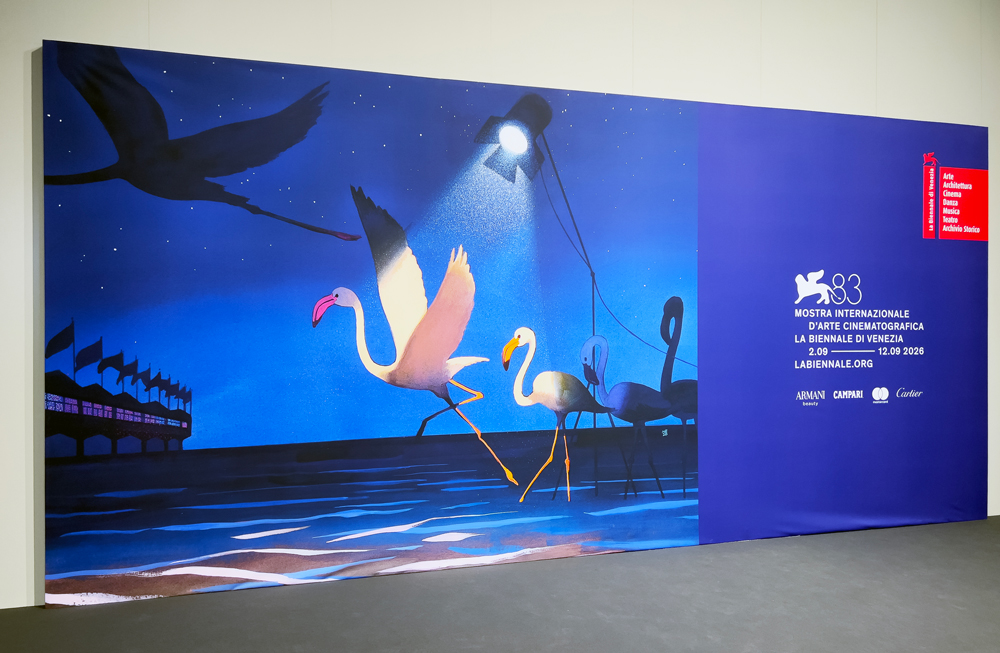
For these ten days, the world’s eyes are on the island of Lido di Venezia, home to the annual Venice Film Festival. This year is no exception when it comes to big names and major comebacks: from Nanni Moretti, back in competition for the first time in 37 years, to Werner Herzog, Martin McDonagh, Florian Zeller, and Lee Chang-dong, returning to cinema after years of silence. It’s certainly a hard-fought race, full of major favorites but also small masterpieces that quietly arrive one evening and shake things up. Among the films in competition, we’re talking about “Look Back,” the new film by Hirokazu Kore’eda presented at the festival on September 7 — and one that could already be a serious contender for the Golden Lion.
Kore’eda’s Return to Competition in Venice
The film marks Kore’eda’s return to competition in Venice after seven years, since “The Truth” opened the festival in 2019, and comes after a 2026 in which the director had already presented “Sheep in the Box” at Cannes. Rarely has a filmmaker returned to the Lido with a film capable of generating such broad, cross-cutting critical acclaim within just a few hours.

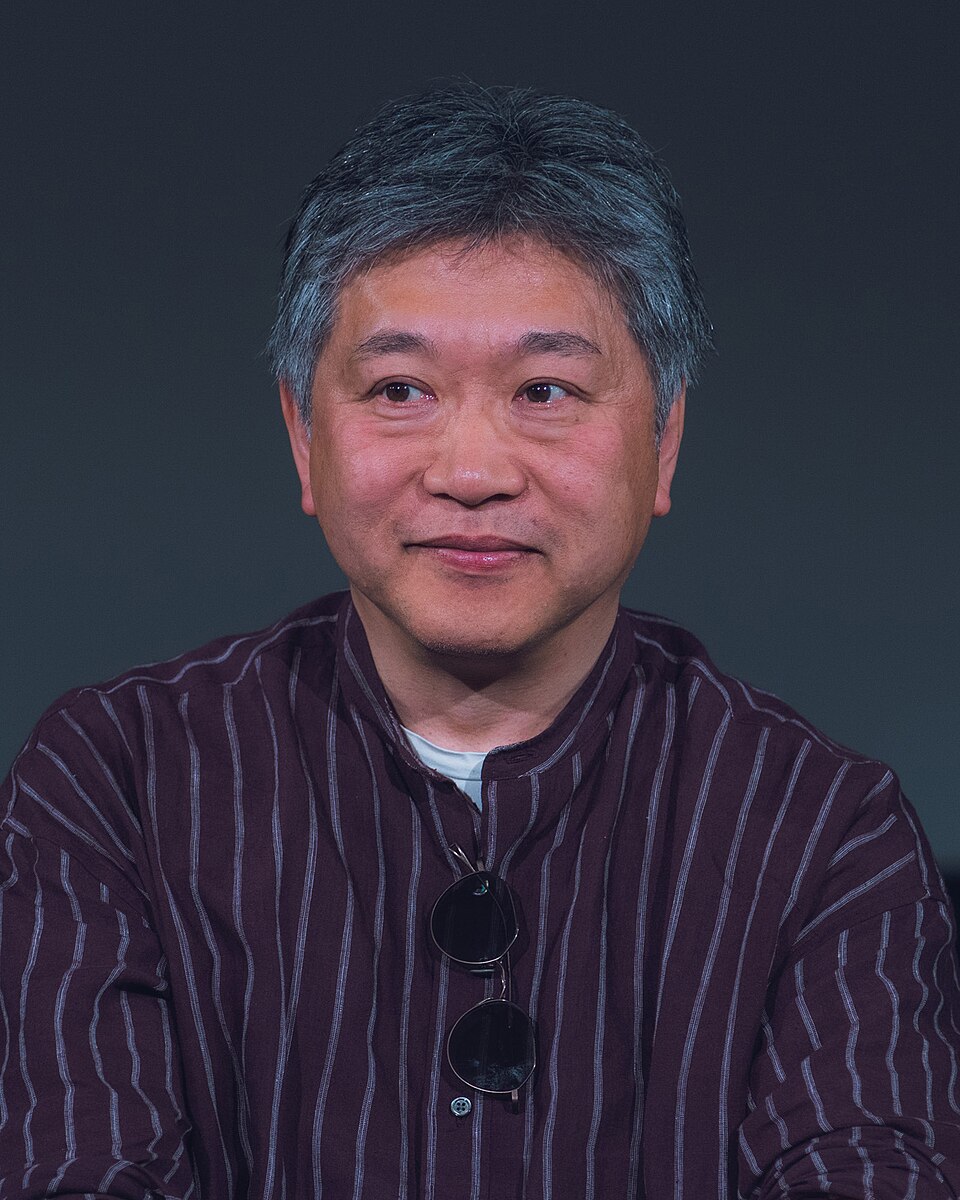
Hirokazu Kore-eda. Photo by Kevin Paul.
Wikimedia Commons, license CC BY-SA 4.0
From Tatsuki Fujimoto’s Manga to the Screen: The Origins of Look Back
The origin story of “Look Back,” as told by the director himself, already has the makings of legend. Returning by train from Kyoto, Kore’eda stumbled across the cover of a book on display in a bookshop at Shinagawa Station. He picked it up on instinct and devoured it in a single night, utterly captivated by the one-shot manga by Tatsuki Fujimoto, first published online in 2021. The director described that encounter as a gentle push he received during a personally difficult period: “I was asking myself what the point of cinema was in a moment like that. That manga felt like someone giving me a push, an encouragement to keep going.”
The Story: Fujino and Kyomoto, Two Aspiring Manga Artists
The film follows the lives of Fujino and Kyomoto — first as children, then teenagers, then young women in a small Japanese town — united by a single passion: becoming successful mangaka (manga authors). The two protagonists are opposite yet complementary figures: Fujino is confident, determined, and convinced of her own talent, while Kyomoto is a true hikikomori who lives shut away at home, capable of devoting every moment of her life to drawing backgrounds. Their artistic partnership begins in their school years and spans thirteen years, but it’s within the tight, formative span of about a year and a half that the film concentrates the essence of this profound bond between two such different yet kindred sensibilities.
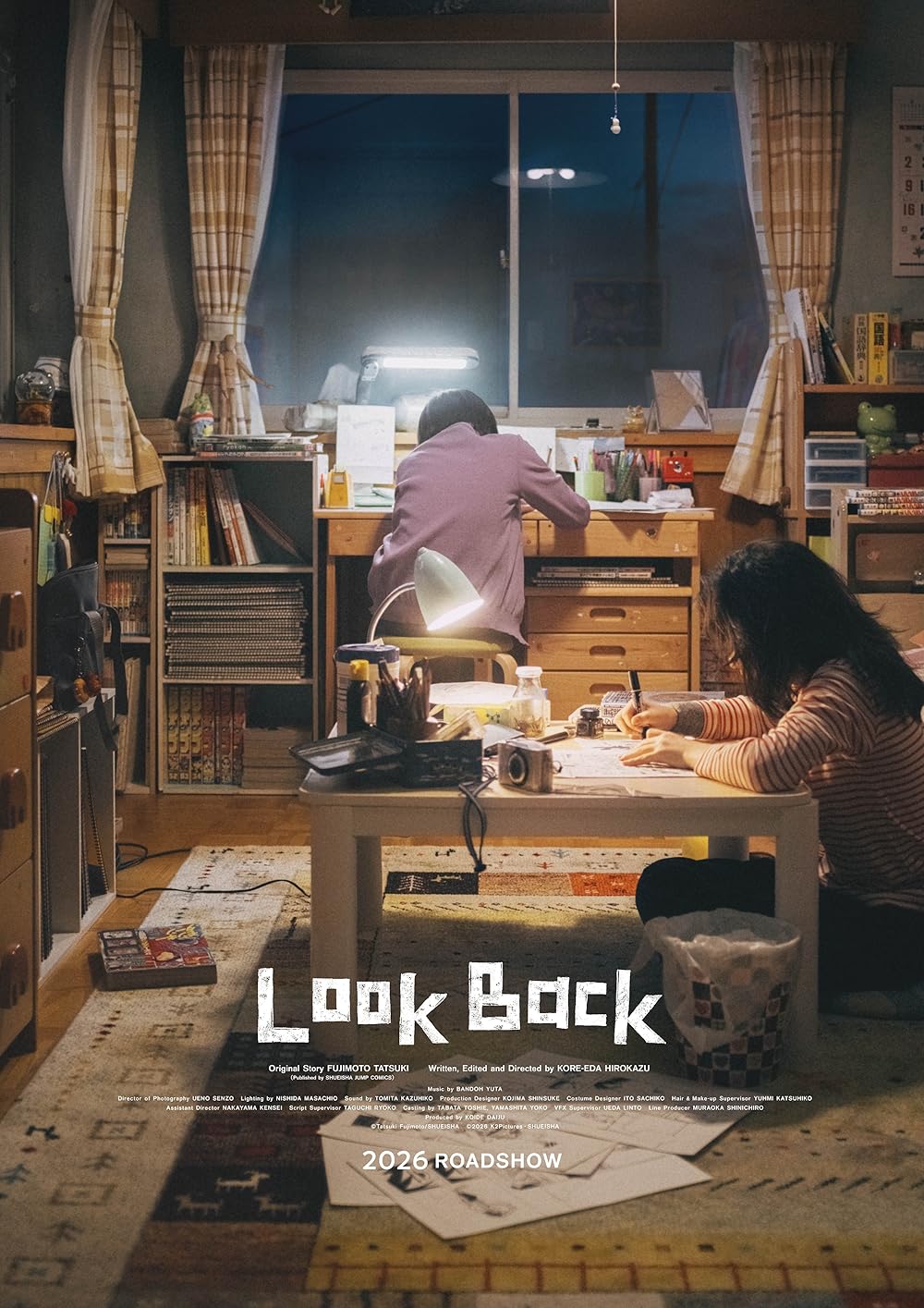
Look Back by Hirokazu Kore-eda. Courtesy La Biennale di Venezia
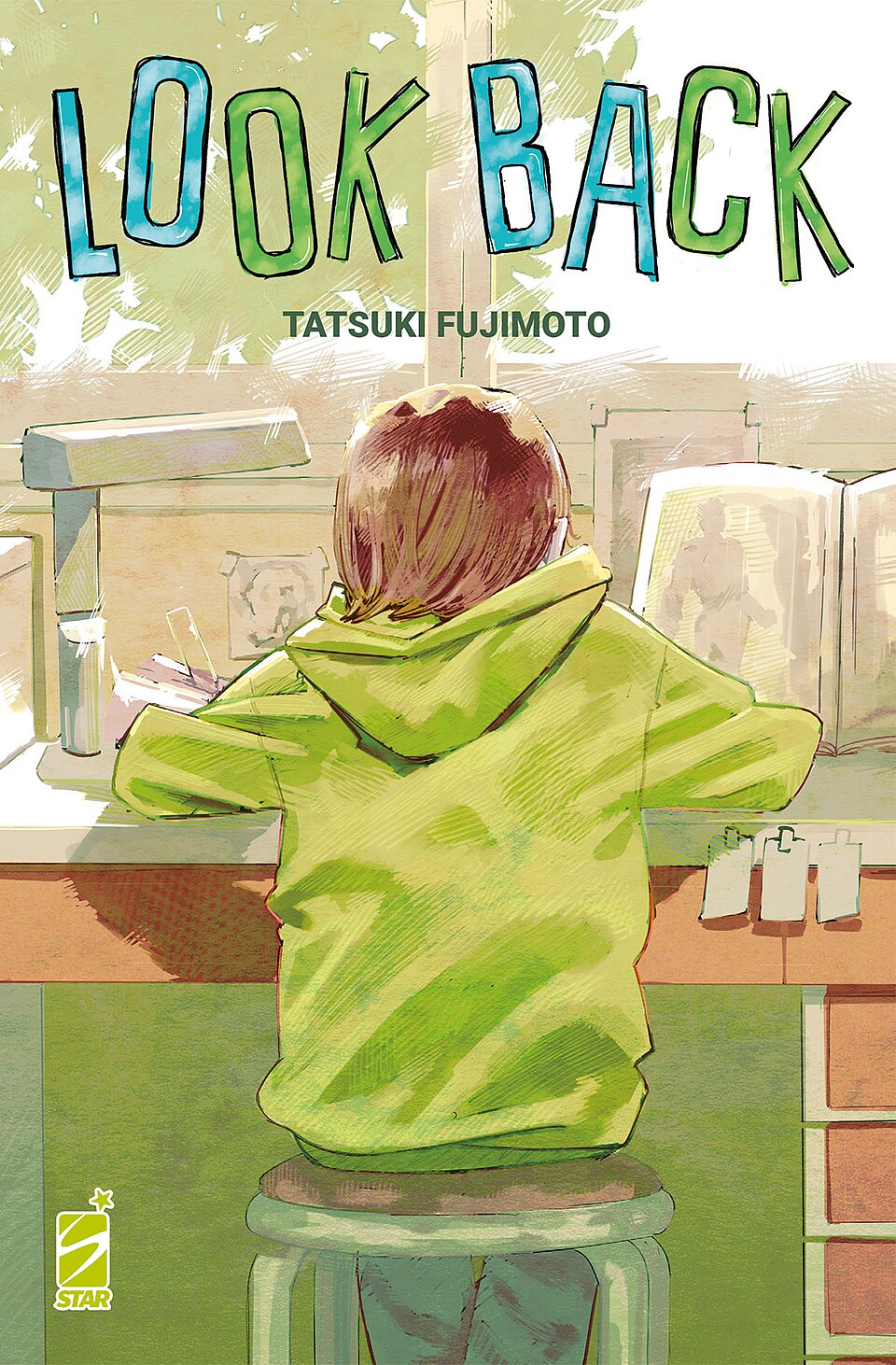
Look Back book by Tatsuki Fujimoto
A Style That Enchants: Time, Sound, and a Miyazaki-like Lyricism
From this simple material, Kore’eda builds what Italian critics are already calling one of the finest films of this year’s edition. The director captures the passage of time — especially childhood and adolescence — with an enchanted, poetic naturalism. We see the wind bending the grass, or deep snow through which the protagonists’ small bodies struggle and rise again, as if it were a metaphor for growing up, reaching heights of lyricism reminiscent of the masterpieces of Hayao Miyazaki and Studio Ghibli, subtly referenced in the film as well.
What’s most striking is Kore’eda’s ability to turn the static, silent act of drawing into genuine cinematic action, emphasizing the sound of the act and how it changes over time: from the scratch of a pen nib on paper to the tapping of electronic drawing tablets, blending with the original score by composer Yuta Bandoh.
Grief and Silence: The Film’s Most Devastating Turn
As in life, something dramatic and painful also occurs during Fujino and Kyomoto’s journey, confronting the viewer with an agonizing, unfillable silence — without ever trying to offer explanations or advice on how to cope with loss, but instead giving space for each person to process it on their own. Empty spaces, an abandoned chair, a sheet of paper left unfinished become universal symbols of what was and what could have been — of the passions that drive every human being to form connections and leave their mark on the world.
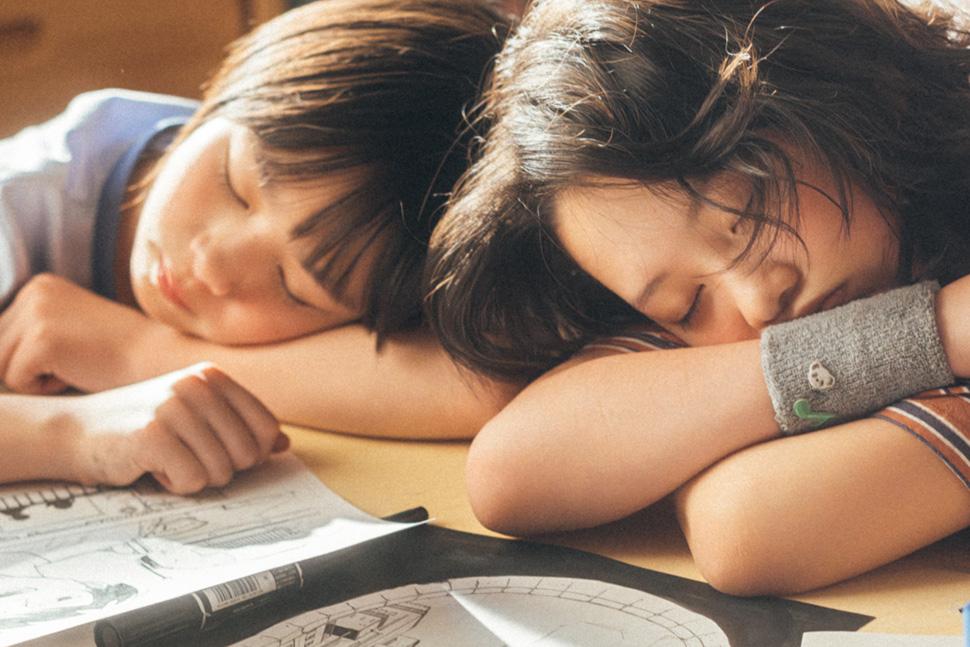
Look Back by Hirokazu Kore-eda. Photo by Hideaki Hamada. Courtesy La Biennale di Venezia
When Look Back Hits Theaters
It will still be a few months before “Look Back” reaches the big screen — but before then, on September 12, the Lido may have already handed it the most coveted prize of the entire festival.
We also included Look Back in our ranking of the best films at the 2026 Venice Film Festival, awarding it first place in our personal selection.
*All images on this blog are used for educational and critical purposes only. Credits and copyrights belong to their respective owners and authors. The gallery remains at the disposal of the rightsholders for any corrections, specific citations, or immediate removals upon request.

