
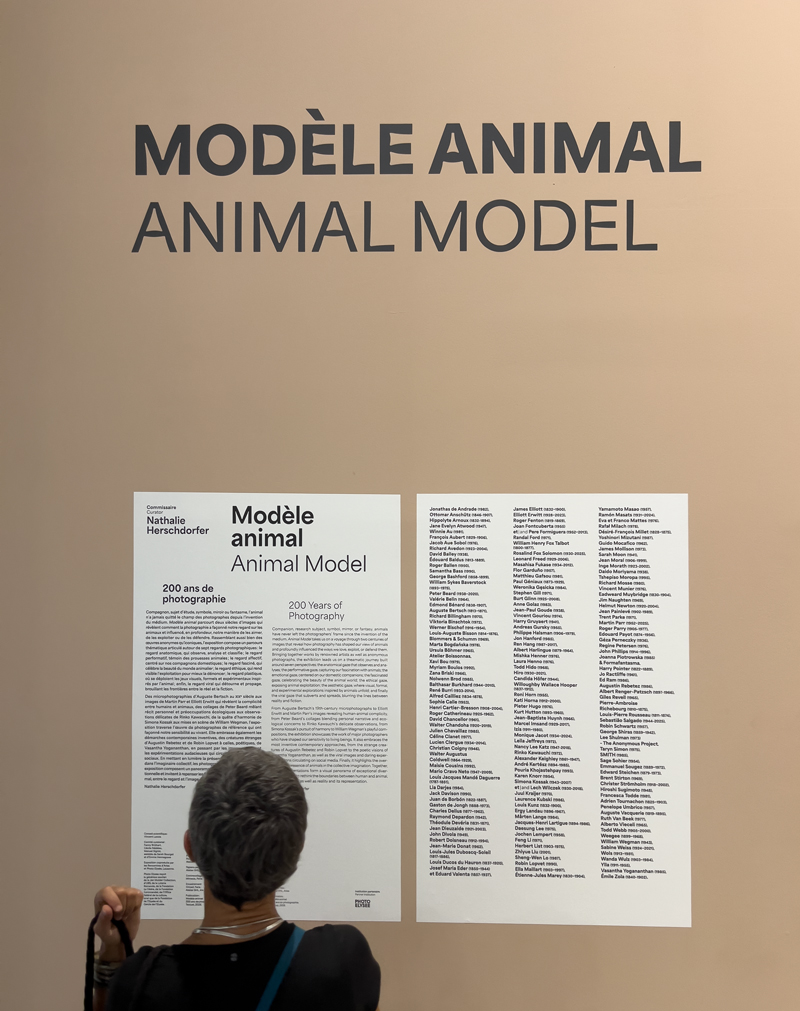
Our relationship with Animals, from early scientific images to Contemporary Photography
Among the exhibitions presented during the 57th edition of Les Rencontres de la Photographie d’Arles, Modèle animal. 200 ans de photographie stands out both for the originality of its subject and for the breadth with which it explores it.
Hosted at La Mécanique Générale, in the Parc des Ateliers, the exhibition marks a first for the festival: despite the extraordinary number of animal images that surround us in everyday life, the Rencontres d’Arles had never before devoted an entire exhibition to the animal world.
Filling this gap is Nathalie Herschdorfer, Director of Photo Élysée, the photography museum in Lausanne, who curates this ambitious project co-produced by Les Rencontres d’Arles and Photo Élysée.
What the Exhibition Is About
Companion, subject of scientific study, symbol and much more: animals have been a constant presence in photographers’ work since the invention of photography itself.
Modèle animal spans two centuries of images, revealing how photography has shaped our perception of animals from its earliest days and profoundly influenced the ways in which we love them, exploit them or attempt to protect them.
Bringing together more than 500 photographs, ranging from anonymous works to iconic images, the exhibition is structured around seven different photographic “gazes”. This thematic organisation helps shape what might otherwise feel like an overwhelming visual experience.
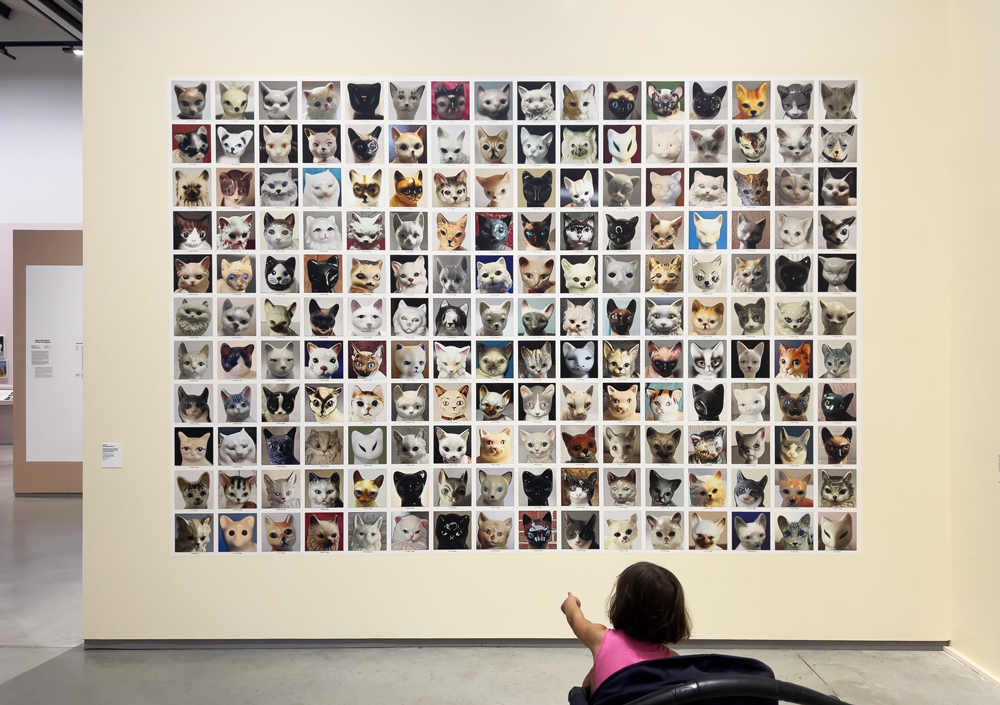
The anatomical gaze observes, analyses and classifies; the performative gaze records animal feats and performances; the affective gaze focuses on our domestic companions; the fascinated gaze celebrates the beauty of the animal world; the ethical gaze exposes exploitation in order to denounce it; and the plastic gaze explores the visual, formal and experimental possibilities inspired by animals.
The exhibition concludes with the viral gaze, a distinctly contemporary perspective in which images are distorted, circulated and endlessly reproduced, increasingly blurring the boundaries between reality and fiction.
Photographers and Works on Display
The photographers featured in the exhibition span widely different periods and styles, bringing exceptional variety to such a broad subject.
The journey begins with the 19th-century microphotographs of Auguste Bertsch and extends to works by Martin Parr and Elliott Erwitt, whose images reveal the complex and often humorous relationship between humans and animals.
Other major names include Sebastião Salgado, Richard Avedon, Sabine Weiss and William Wegman, alongside the collages of Peter Beard, which combine personal storytelling with ecological awareness, and the delicate observations of Rinko Kawauchi.
More experimental contemporary approaches are also represented, from the uncanny creatures of Augustin Rebetez and Robin Lopvet to the poetic images of Vasantha Yogananthan, as well as viral photographs created and circulated through social media.
The Exhibition Design and Visitor Experience
La Mécanique Générale is one of the most distinctive venues of the festival and forms part of the larger urban regeneration project developed around the Parc des Ateliers in Arles.
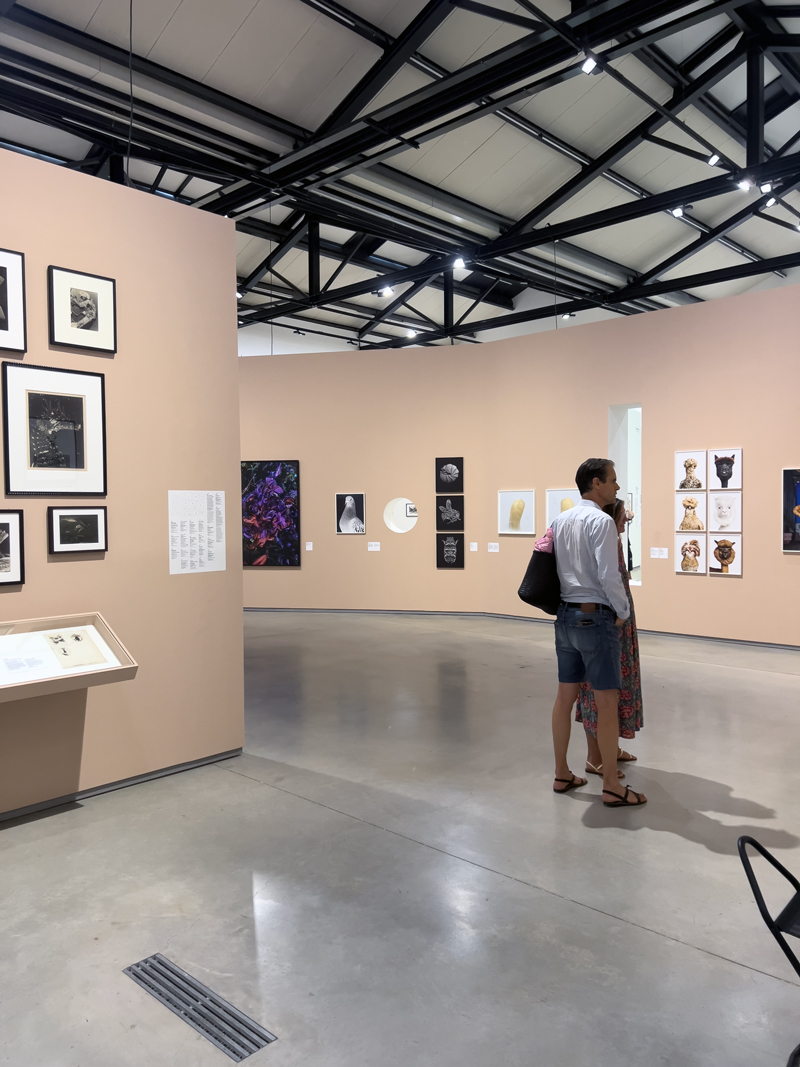
Within these industrial spaces, more than 500 photographs create an exceptionally diverse visual landscape, bringing together periods, styles and sensitivities that are often far removed from one another.
From 19th-century scientific photography to the most recent digital experiments, the exhibition design allows every image to retain its own identity while contributing to a broader visual narrative, avoiding predictable or conventional presentation choices.
Why It Is Worth Seeing
Modèle animal succeeds in telling several stories at once, making it a uniquely rich exhibition for anyone interested in photography.
It is also a show that deserves to be seen beyond the context of Europe’s leading photography festival. After Arles, the exhibition will travel to Photo Élysée in Lausanne, where it will be on view from 4 December 2026 to 4 April 2027.
The exhibition traces the history of photography, from its earliest experiments to contemporary practices, through both personal and documentary approaches adopted by photographers across different periods.
At the same time, it offers a broader history of the relationship between humans and the animal world, exploring its many facets, tensions and contradictions.
The different “gazes” developed by the curator can be understood as chapters in a larger book on animal photography. This structure transforms the exhibition into a more coherent and thought-provoking experience than a straightforward anthology of famous photographers and celebrated images.
While the entire exhibition is visually compelling, the ethical section is, in our view, one of its most significant. It once again demonstrates how art and photography can communicate powerful messages about the protection of endangered species, the fight against animal exploitation and the debate surrounding animal testing.
Modèle animal is also part of our selection of the best exhibitions at Les Rencontres d’Arles 2026
Practical Information
- Exhibition title: Modèle animal. 200 ans de photographie
- Venue: La Mécanique Générale, Parc des Ateliers, 33 avenue Victor Hugo, 13200 Arles
- Dates: 6 July – 4 October 2026
- Opening hours: 9:30 am – 7:30 pm
- Festival: Les Rencontres de la Photographie d’Arles, 57th edition
- Curator: Nathalie Herschdorfer, Photo Élysée, Lausanne
- Scientific advisor: Vincent Lavoie
- Related publication: Modèle animal. 200 ans de photographie, Textuel, 2026
- Next venue: Photo Élysée, Lausanne, from 4 December 2026 to 4 April 2027
*All images on this blog are used for educational and critical purposes only. Credits and copyrights belong to their respective owners and authors. The gallery remains at the disposal of the rightsholders for any corrections, specific citations, or immediate removals upon request.

