
Geographies of distance: Remembering Home
After seven years of silence, India returns to the Venice Biennale 2026 with one of the most beautiful and emotionally resonant group projects in the entire exhibition. Geographies of Distance: Remembering Home, curated by Amin Jaffer, presents five artists from different parts of the country, called upon to express their national identity through traditional materials and building techniques.
We also included the India Pavilion in our selection of the seven must-see national pavilions at the 2026 Venice Biennale.
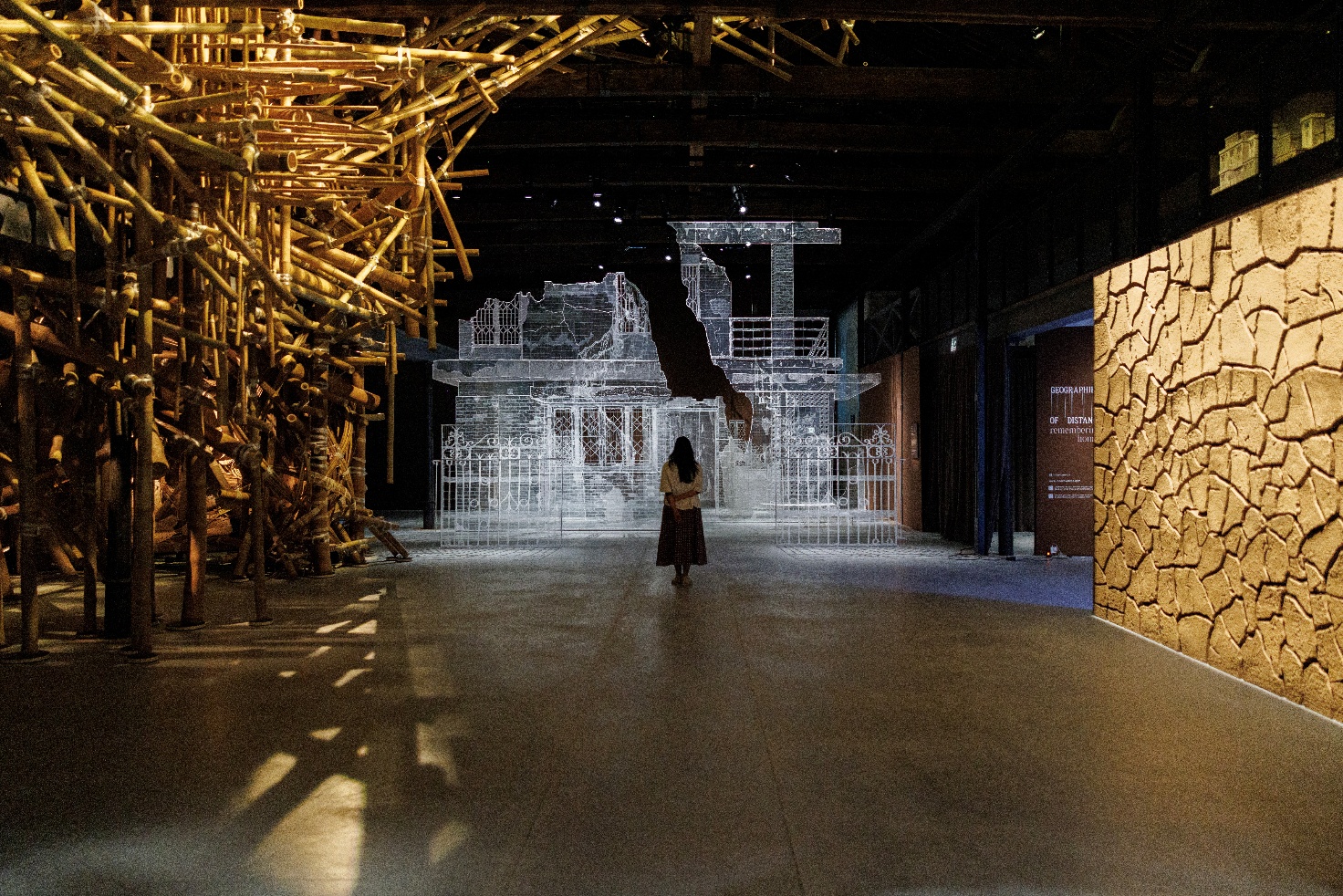
Geographies of Distance Remembering Home India Pavilion Venice Biennale 2026. Photo by Jacopo Salvi
Five Artists, Five Materials: The Transformation of Contemporary India
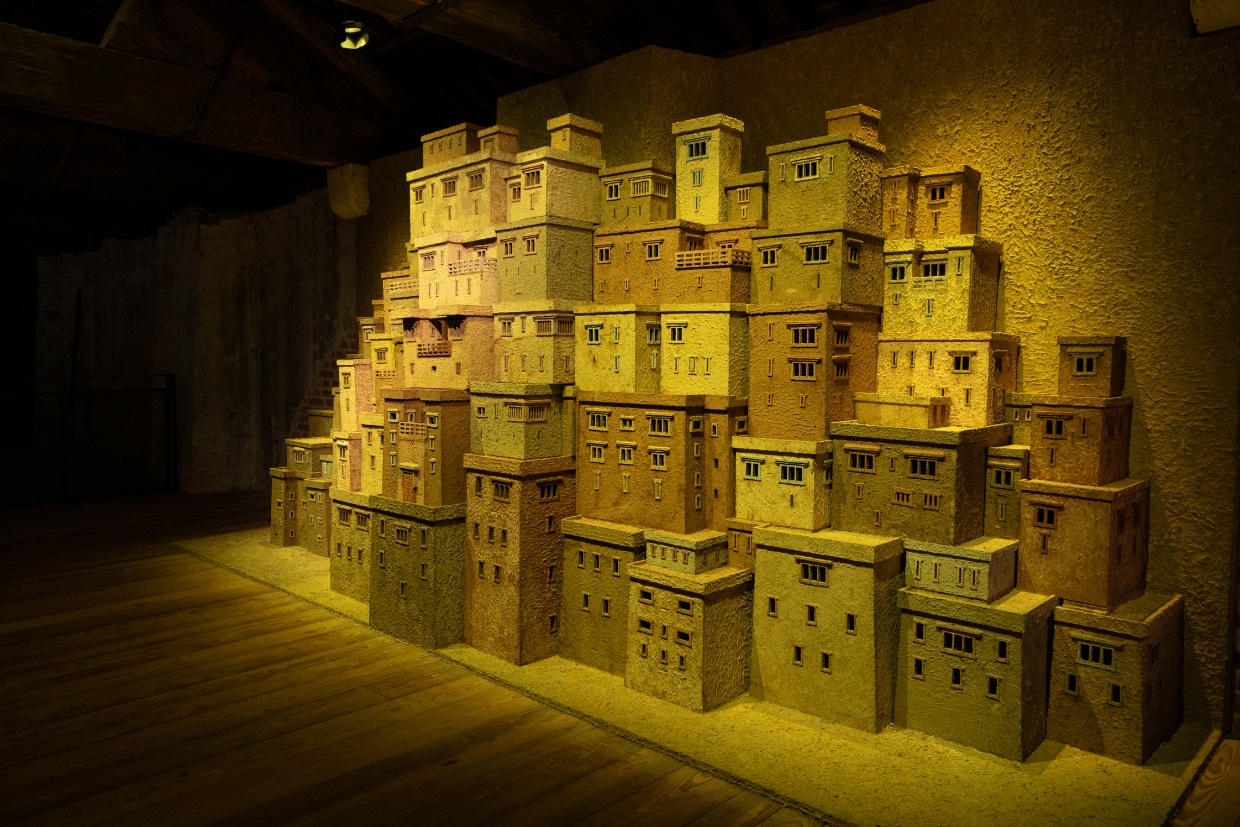
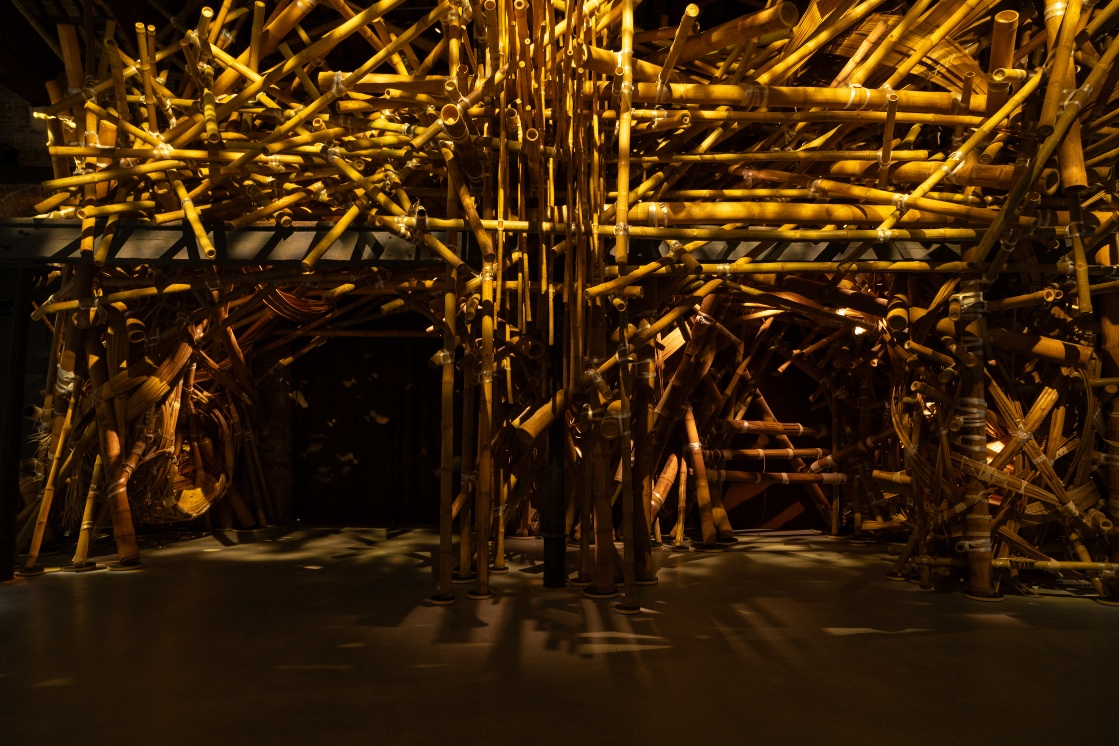
The exhibition reflects the transformation of contemporary India, whose cities are expanding at an unprecedented pace. Five artists, rooted in traditional material cultures, give shape to this condition. Alwar Balasubramaniam’s clay works register the fragility of the earth. Sumakshi Singh uses thread to recreate a demolished home, transforming it into a delicate structure of memory. Ranjani Shettar creates hanging gardens from organic materials, while Skarma Sonam Tashi’s papier-mâché architectures evoke a Ladakh under threat from development. Asim Waqif’s bamboo symbolizes the frenetic urban growth that ends up displacing the collective past.
Alwar Balasubramaniam: The Earth as Primordial Matter
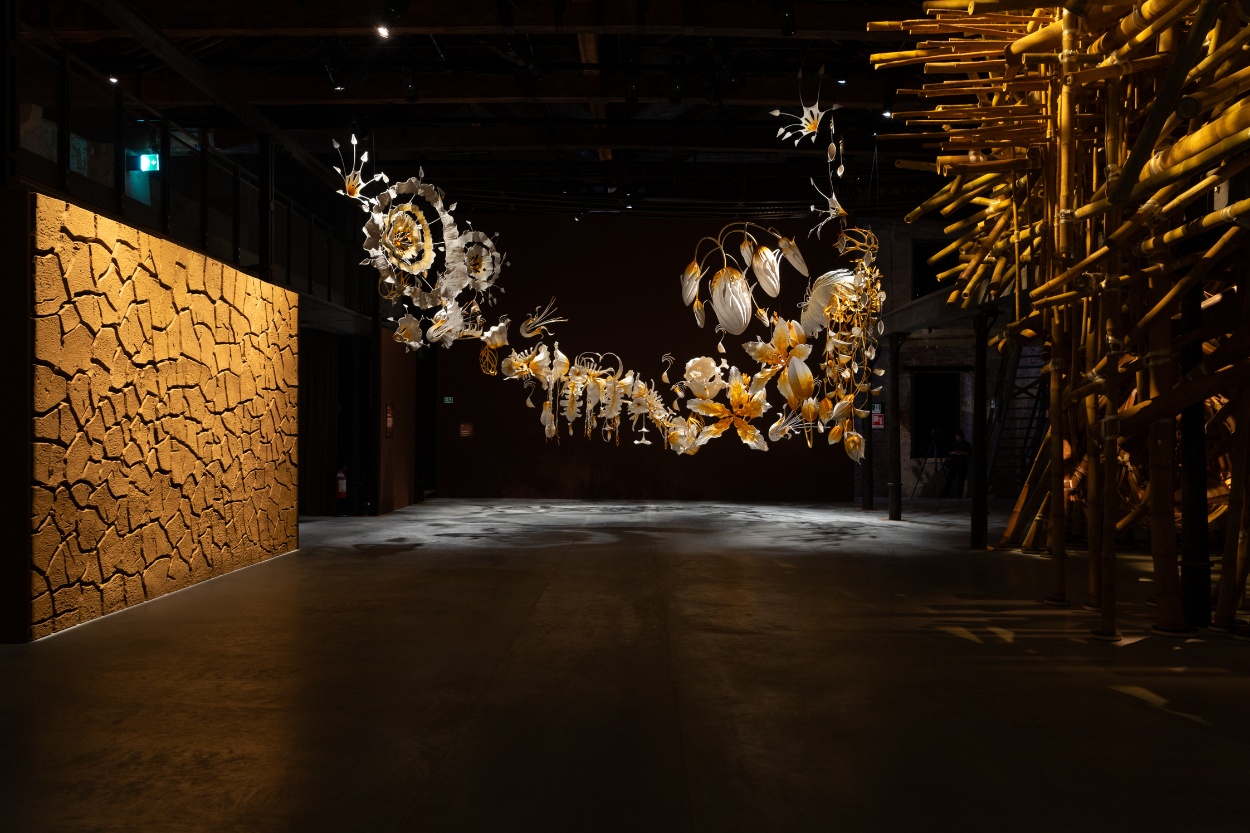
Alwar Balasubramaniam’s work might seem like a narrative detached from domestic space, but it actually concerns the primordial matter of our planet: the ground on which we live, build, destroy, and rebuild. The earth is shown as an element both strong and fragile at once, highlighting the cracks and fissures that run through it. It is the physical result of the bonding and separation of earth and water. The way the land drifts, segments, or becomes isolated serves as a symbol for our own fragmentation, the act of distancing ourselves from the whole or from one another.
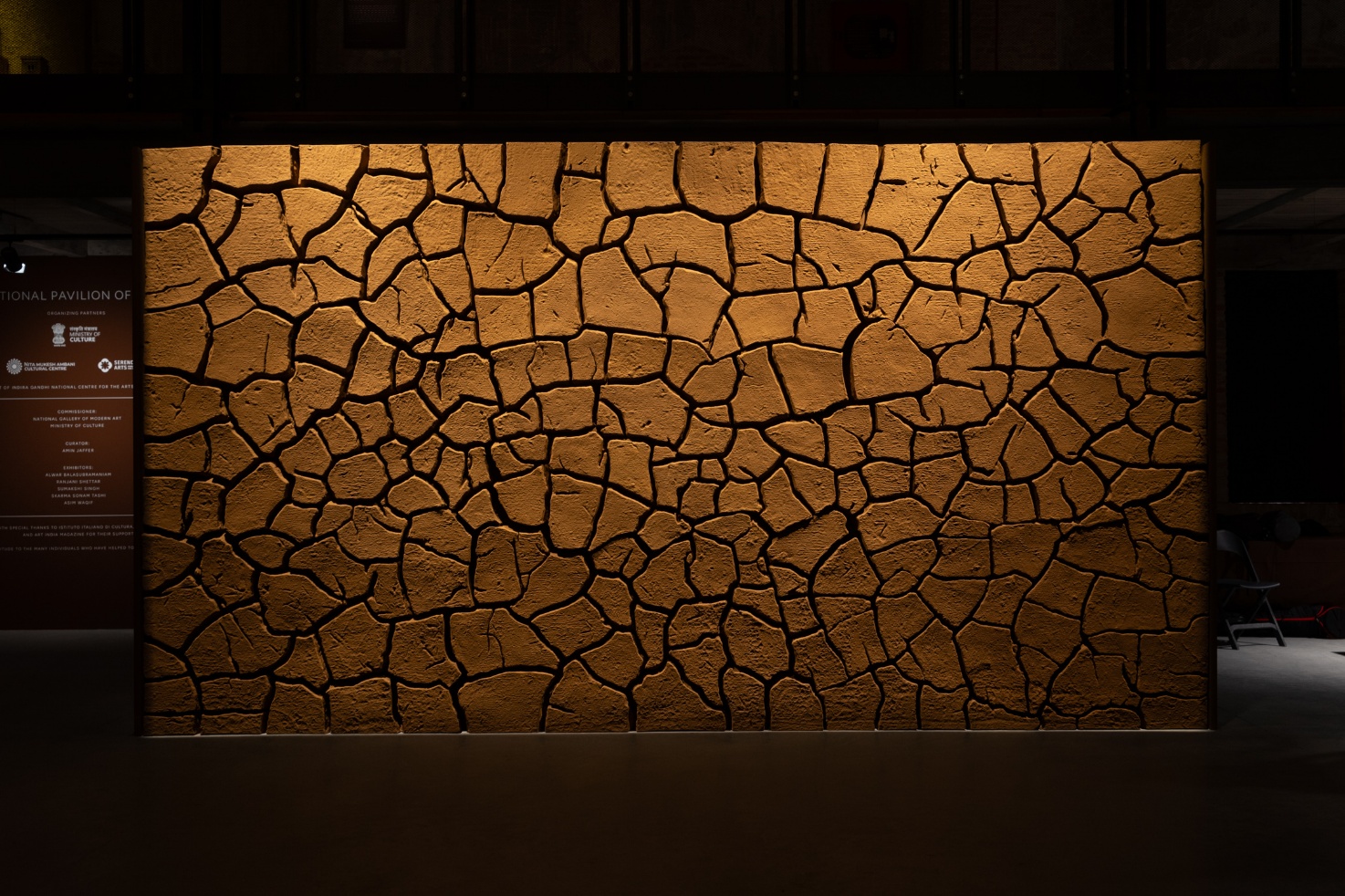
Geographies of Distance Remembering Home India Pavilion Venice Biennale 2026. Photo by Luca Zambelli Bais
Sumakshi Singh: A Home Recreated in Thread
Sumakshi Singh’s installation recreates in thread the demolished family home at 33 Link Road, New Delhi, where the artist spent her childhood. The lace-like structures render walls, hinges, and brickwork as translucent, spectral outlines, revealing how architecture has been recreated as an act of labor and memory. What was once a solid shelter becomes a weightless apparition, inviting visitors to reflect on loss, and to question what home means when its physical form has vanished entirely.
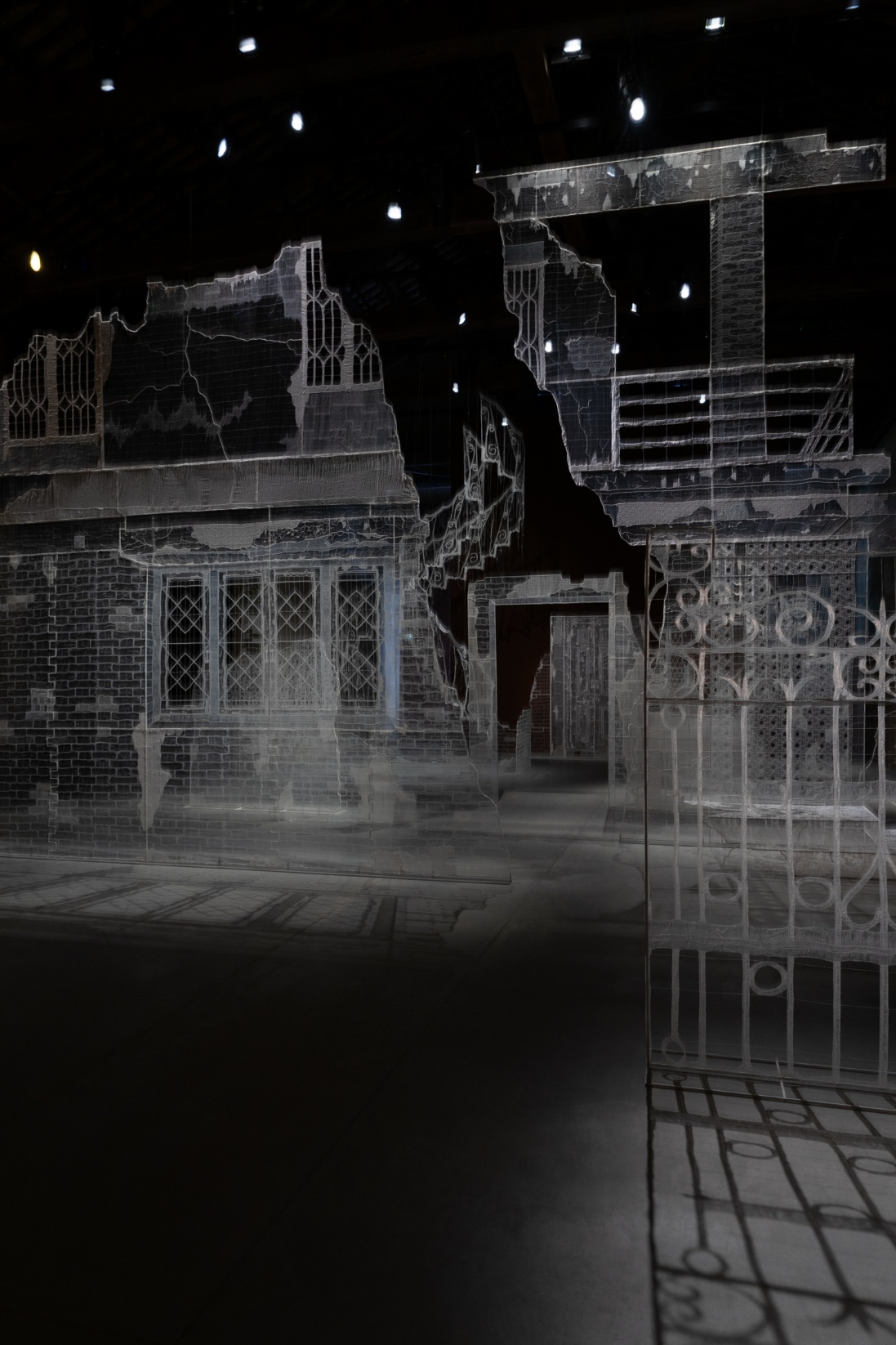
Geographies of Distance Remembering Home India Pavilion Venice Biennale 2026. Photo by Luca Zambelli Bais
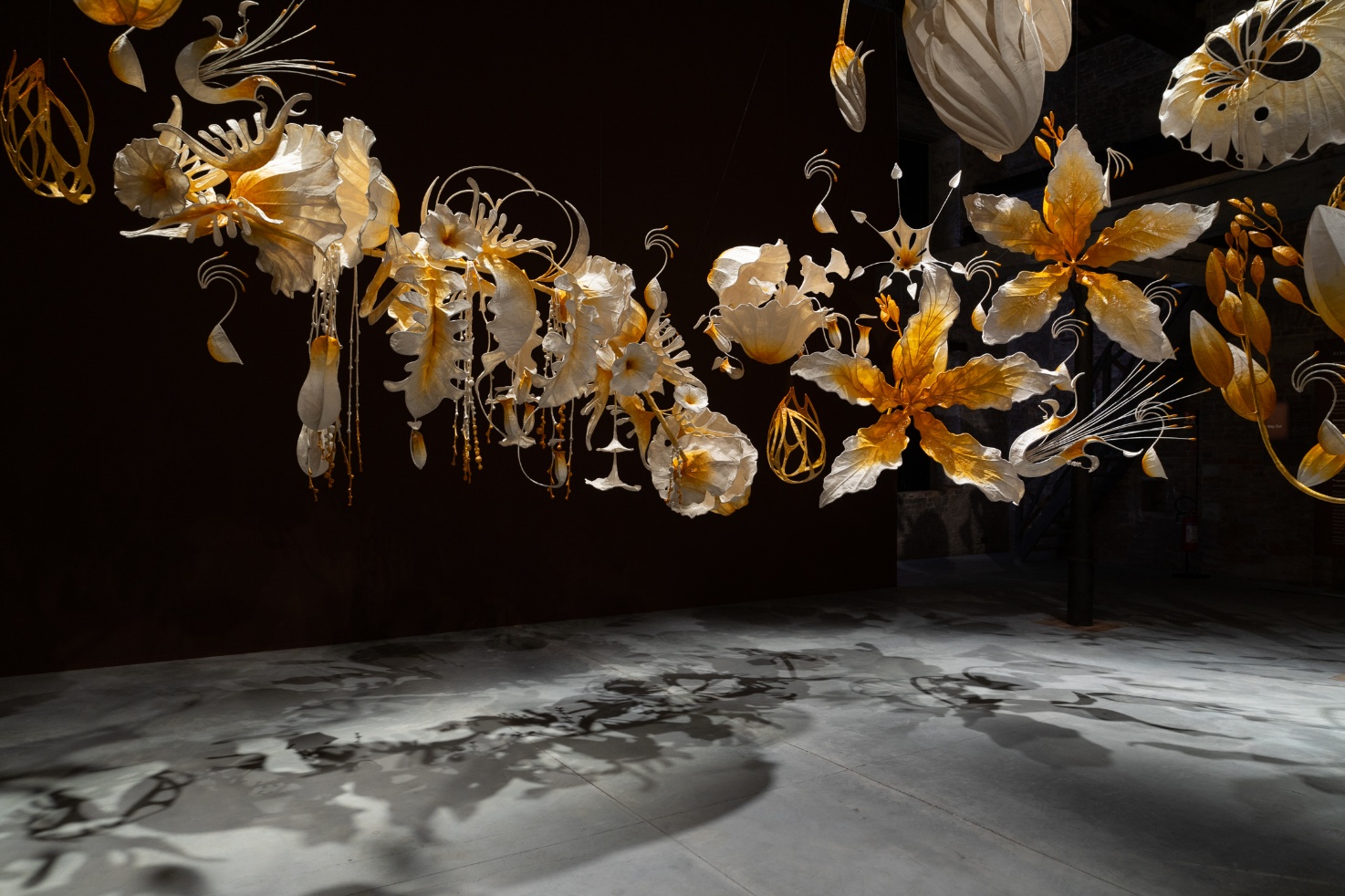
Geographies of Distance Remembering Home India Pavilion Venice Biennale 2026. Photo by Luca Zambelli Bais
Ranjani Shettar: A Garden Suspended Between Form and Movement
Ranjani Shettar’s suspended sculptural garden unfolds as a lyrical composition of form, material, and movement, where hand-crafted elements hover in delicate equilibrium. Drawing on artisan traditions and her close observation of the natural world, the artist creates an immersive space that invites the viewer into an ethereal choreography. Inspired by organic forms across diverse landscapes, her work evokes a fragile yet resilient ecology, diverse, yet in harmony. In this installation, home becomes a sensory and contemplative condition: a place of balance achieved through thoughtful composition.
Skarma Sonam Tashi: The Vernacular Architecture of Ladakh
Positioned on the mezzanine like a settlement on a mountain slope, this installation evokes the vernacular architecture of Skarma Sonam Tashi’s native Ladakh, with earth-walled homes shaped by climate, community, and generations of accumulated building knowledge. Constructed from recycled cardboard, papier-mâché, and clay pigmented with natural binders, the structures mirror the vulnerability of traditional Ladakhi ways of life under pressure from urban migration and modern construction in steel, concrete, and industrially produced materials.
Geographies of Distance Remembering Home India Pavilion Venice Biennale 2026. Photo by Luca Zambelli Bais
Geographies of Distance Remembering Home India Pavilion Venice Biennale 2026. Photo by Luca Zambelli Bais
Asim Waqif: Bamboo as a Symbol of Urban Development
Asim Waqif’s bamboo coils into a construction that looms over viewers the moment they cross the pavilion’s threshold. According to the curator, his work recalls the scaffolding that fills India and stands as a symbol of the country’s rapid development and its increasingly modern-leaning architecture. In what could be described as a metonymic gesture, the artist represents the load-bearing structure necessary for construction, in order to shift attention onto the product of that labor: the building yet to come.
Why the India Pavilion Is Among the Most Compelling of the 2026 Biennale
The India Pavilion cannot leave visitors indifferent, thanks to the monumental scale of the works and the environment they help create, projecting visitors into an India quite different from the common mental image. The strength of this project lies in its reflection on a single theme — home — explored across multiple levels, from the universal to the particular and back again. Contemplating these works sets up an ongoing dialogue between the viewer and the artist’s own biographical experience, the proximity or distance of their position relative to Indian culture, and finally, the sense of belonging to a universal human community. In the end, this is the true message the curator has chosen to leave behind: it doesn’t matter where you come from or where you’re headed, because everyone has a home. The concept of home is understood not only in the literal sense of a physical place, but above all as a place of the heart, of memory, of habits, and of the emotions tied to a place that makes us feel protected and that we belong to this world.
Belonging is one of the words that best describes the five works by these artists, who work by hand with traditional techniques and materials, part of the nation’s history, yet at the same time archetypal symbols of humanity’s development on earth. It begins with the ground we have walked on for millions of years, which, combined with water and heat, can become a strong building material, just as wood, flexible and solid, can form scaffolding to move across; it then moves to the delicacy of paper and thread, which make up textiles (another important form of protection for the body). This shows how, in the India Pavilion, one can find all the ingredients that, through continuous transformation, have formed the foundation of human civilization’s inhabiting of the Earth.
Geographies of Distance Remembering Home. India Pavilion Venice Biennale 2026. Photo by Luca Zambelli Bais
Change is another idea evoked by the curator for this project. It traces the transformation of dwelling places in relation to human change, both within society and in private life, always moving in a relationship from the universal to the particular. This is especially evident when looking at India’s current situation, a country undergoing a period of development across various fields, where the theme of migration is central. In a globalized world where everything seems within reach, yet reaching it requires constant movement and adaptation to every form of change, it becomes easy to lose one’s identity, and just as easy to confuse who we are with what we have. Home remains the emblem of resistance to the indistinct, fast-moving fluidity of our contemporary world, a place that can be both physical and emotional, but one we can always return to and evoke whenever we wish, even when it has been physically destroyed.
For these reasons, and a thousand others to be found in the contemplation of these great works, the India Pavilion, according to the San Polo Art Gallery, stands as one of the most compelling of this edition, capable of combining the representation of a national identity with a universal message, aesthetic value with value of meaning, and a gaze that looks to the past, the present, and the future.
*All images on this blog are used for educational and critical purposes only. Credits and copyrights belong to their respective owners and authors. The gallery remains at the disposal of the rightsholders for any corrections, specific citations, or immediate removals upon request.

