The Best National Pavilions at the 2026 Venice Biennale: 7 Must-See Exhibitions

by | Oct 13, 2026

Discover the most remarkable National Pavilions before November 22

The end of the 2026 Venice Biennale, one of the world’s most important international contemporary art exhibitions, is not far off. This article is a summary of the national pavilions that struck us most for their beauty and originality, but above all an invitation to make the most of the last few days, until November 22, to discover the projects and artists of the Biennale Arte.

The national pavilions we recommend: Spain, Japan, Greece, India, Saudi Arabia, Germany and Austria.


The theme of the 2026 Biennale Arte: “In Minor Keys”

Even before the opening days in May, the 61st edition of the Biennale Arte was marked by wide international debate, for which it will surely be remembered in the history of the Exhibition. But beyond disputes and conflicts, what messages has “In Minor Keys” left us? What content did artists and curators bring, and what form did they give it? Here are the answers we personally found most convincing to the theme set by curator Koyo Kouoh.

Spain

Oriol Vilanova, Los restos


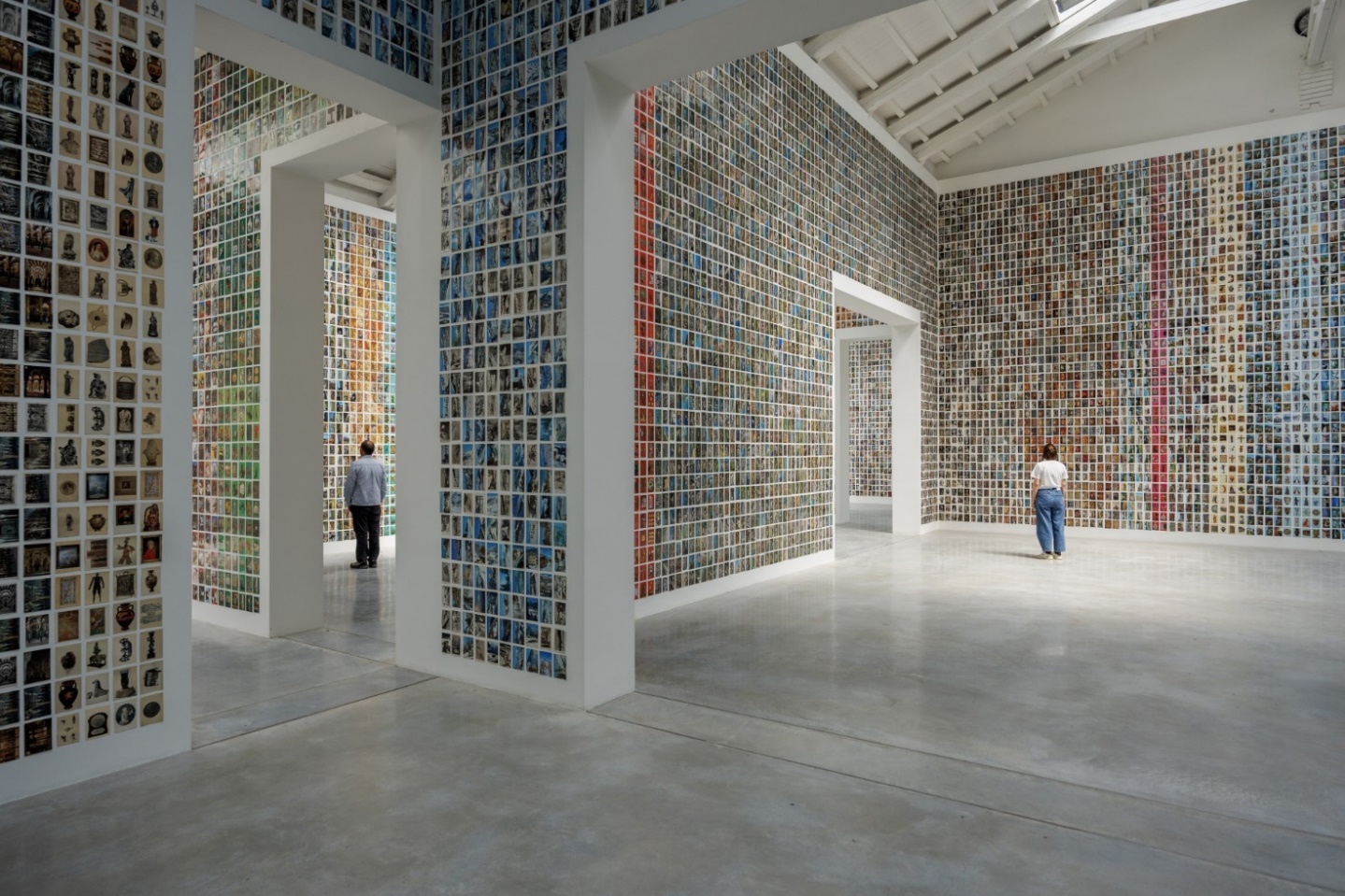
Among the most surprising pavilions of this Biennale is the Spanish one, where Oriol Vilanova, curated by Carles Guerra, shows that transforming a space requires neither monumentality nor special effects. Starting from more than twenty years of postcards salvaged from flea markets, the Catalan artist covers the walls of the Giardini with a dense, regular composition, Representación, which from afar looks like one large abstract work and up close opens into thousands of tiny universes, inviting visitors to slow down and imagine a story. The result is a true anti-museum, where masterpieces and souvenirs coexist with equal dignity, and memory, in an age of frenzied image scrolling, becomes a slow gesture again. Also not to be missed is the performance El fantasma de la libertad: a single postcard shown by surprise to visitors between the Giardini and the Arsenale. A pavilion that reminds us how much the value of an image depends on the memories it manages to generate.

Spanish Pavilion at the Venice Biennale 2026: Oriol Vilanova Transforms Postcards into a Museum of Memory

Oriol Vilanova, Los Restos, Spain Pavilion 61ª Biennale Arte Venice. Ph Jacopo Salvi. Courtesy of La Biennale

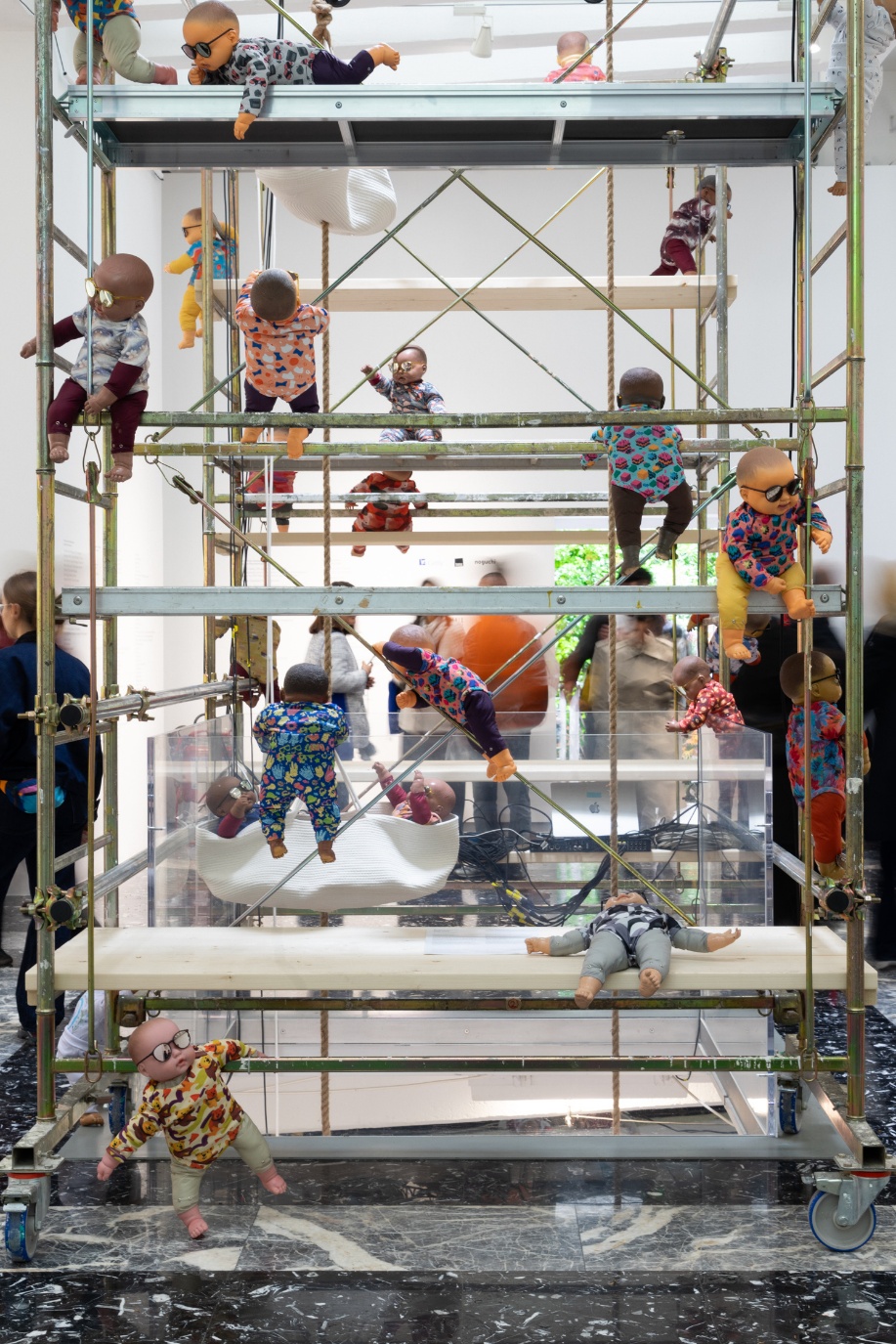
Japan Pavilion at the Venice Biennale 2026: Ei Arakawa-Nash's Dolls on What It Means to Be a Parent

Grass Babies Moon Babies, Ei Arakawa-Nash, Japan Pavilion, Venice Biennale, Ph Luca Zambelli Bais

Japan

Ei Arakawa-Nash, Grass Babies, Moon Babies


If there is one pavilion you cannot miss, it is the Japanese one, among the most original experiences of the entire Exhibition. Ei Arakawa-Nash, curated by Lisa Horikawa and Mizuki Takahashi, invites visitors to pick up one of 200 dolls, each weighing as much as a real newborn, and carry it around up to the upper floor, where a changing table lets you change its diaper and discover, via a QR code, a “diaper poem” linked to its “birth” date. More than a performance, it is total participatory art: without the audience’s gesture, the pavilion would just be a modernist building full of abandoned dolls. Those who immerse themselves in the fiction, those who tire quickly, those who mostly think about the selfie: the work stages every reaction without judging any of them, and in this way reflects, from the perspective of a queer father, on the complexity of being a parent.

Greece

Andreas Angelidakis, Escape Room


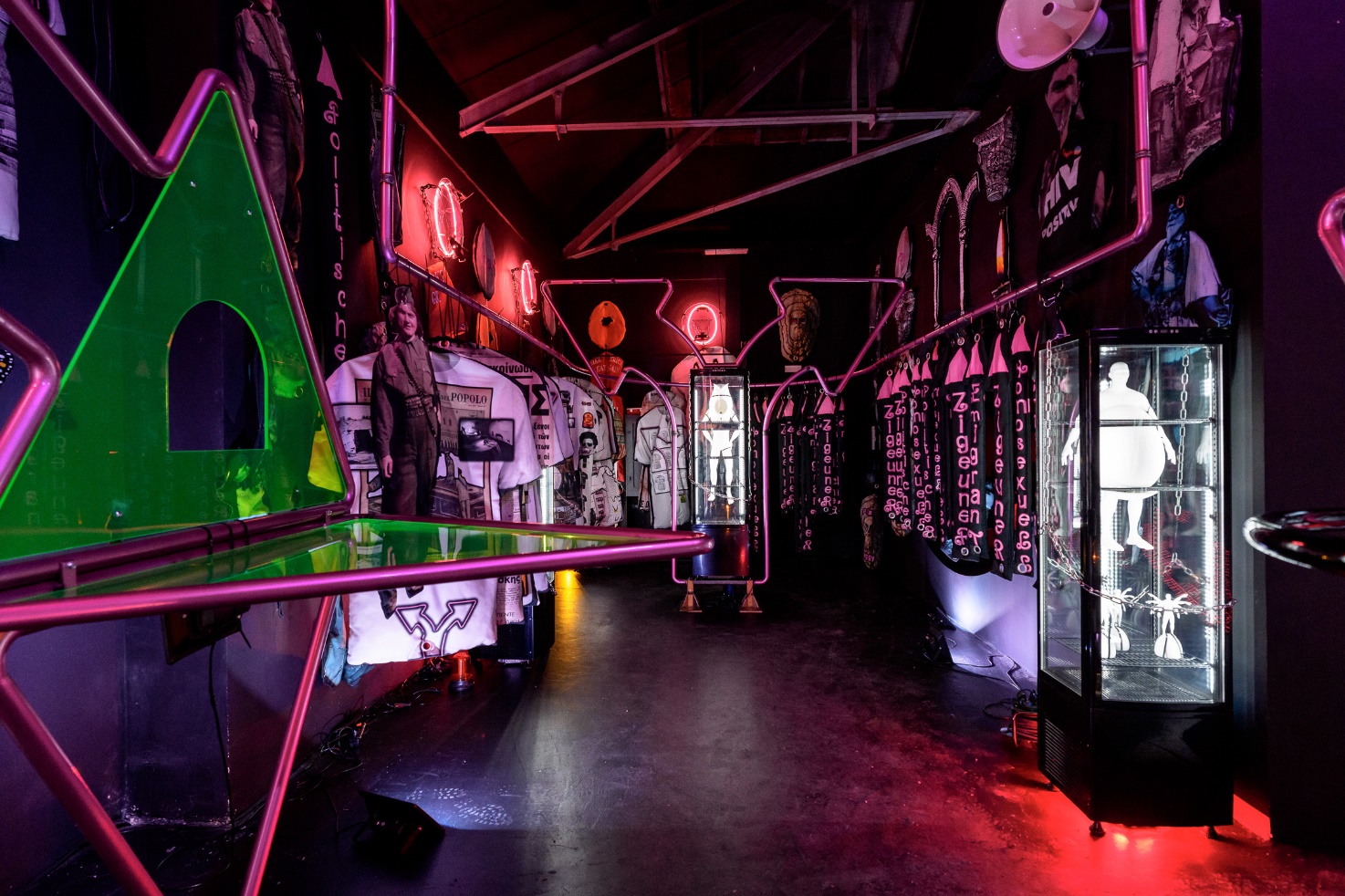
Among the pavilions that impressed us most is the Greek one, where the Athenian artist and architect Andreas Angelidakis, curated by George Bekirakis, borrows the language of escape rooms to build something far deeper than a game. Here there is no door to find: the real question is which reality we are trying to escape from. Inspired by Plato’s cave, Angelidakis turns the Giardini building into a labyrinth of videos, architectural fragments, souvenirs and traces of Greek history, including the memory of Peggy Guggenheim in the pavilion during the Civil War. There is no single narrative thread: clues are scattered through the space and it is up to visitors to choose which ones to follow. One of the most original works of this edition, offering no solutions but inviting us to stay and question what we consider real. The challenge, perhaps, is to notice the room we have already entered.

Greek Pavilion at the Venice Biennale 2026: Andreas Angelidakis’ Escape Room Between Memory and Reality

Pavilion of Greece, ESCAPE ROOM, Photo Andrea Avezzù. Courtesy La Biennale di Venezia

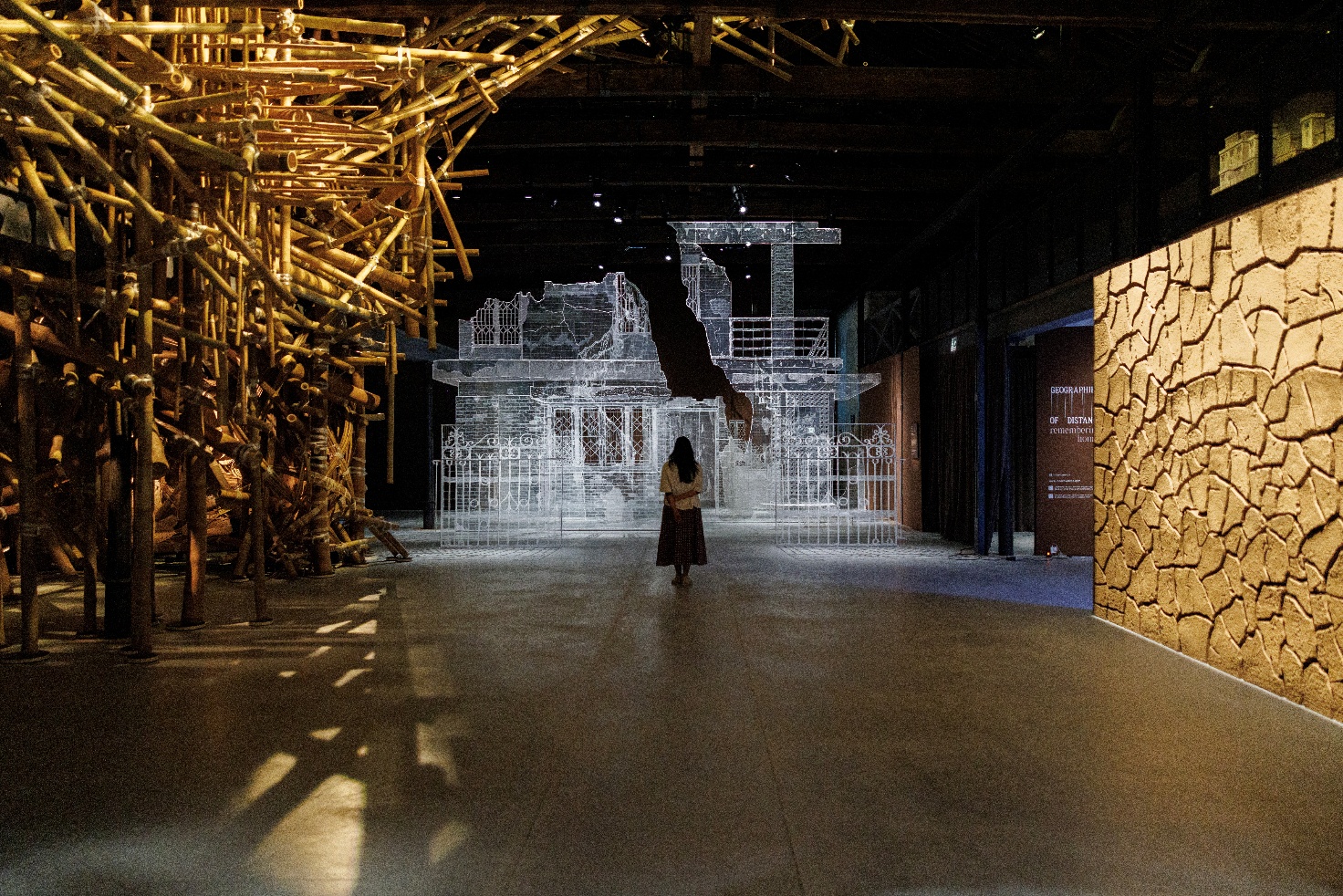
India Pavilion at Biennale Arte 2026 Venice

Geographies of Distance Remembering Home. India Pavilion Venice Biennale 2026. Photo by Luca Zambelli Bais

India

Geographies of Distance: Remembering Home


After seven years of absence, India returns to the Biennale with one of the most beautiful and emotional collective projects of the entire exhibition. Curated by Amin Jaffer, the pavilion brings together five artists who, working by hand with traditional materials and techniques, reflect on the country’s transformation and the meaning of “home.” The cracks in Alwar Balasubramaniam’s clay, the demolished childhood home recreated in thread by Sumakshi Singh, Ranjani Shettar’s suspended garden, Skarma Sonam Tashi’s papier-mâché architecture of Ladakh and Asim Waqif’s imposing bamboo construction converse about memory, loss and urban development. The project’s strength lies in treating the theme on multiple levels, from the universal to the particular, projecting visitors into an India different from the common image. The final message is that it doesn’t matter where you come from or where you are going: everyone has a home, understood above all as a place of the heart and of memory. A pavilion that combines national identity with universal breadth.

Saudi Arabia

Dana Awartani, May your tears never dry, you who weep over stones


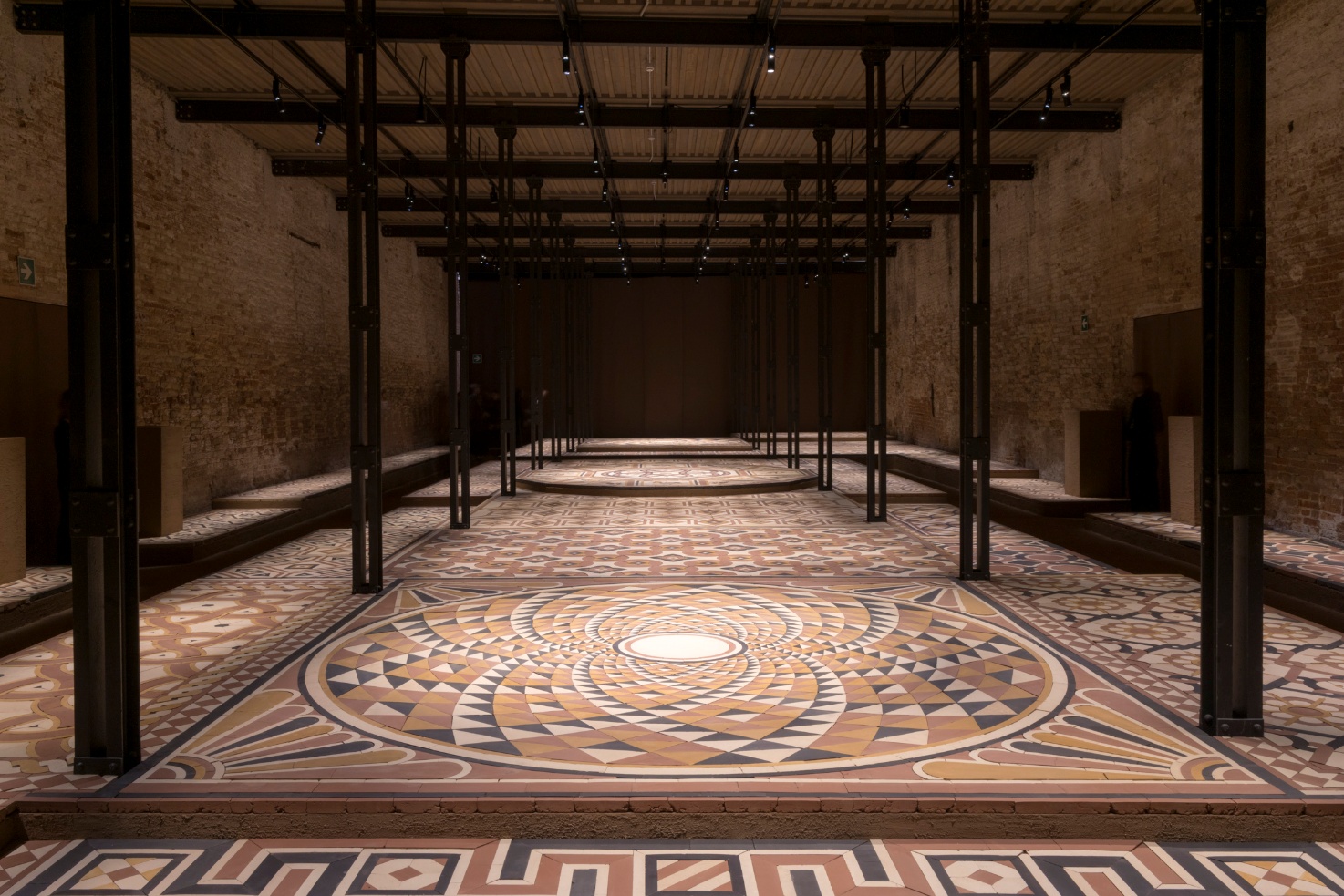
The Saudi pavilion’s project draws on artisanal techniques and millennia-old traditions of the Arab world and sets them in the spaces of the Venice Arsenale to offer an urgent and thoroughly contemporary reflection. More than 29,000 clay tiles and bricks form a mosaic floor that visitors can walk across and around, and above all contemplate its inevitable disintegration. Each brick was made using Lego molds and colored clays, but the artist’s choice not to use binding agents means cracks develop over time. This imaginary archaeological site in fact evokes countless cultural heritage sites threatened and very often damaged by ongoing conflicts. One could therefore say that the pavilion’s true message lies precisely in those cracks that form and keep forming with no one taking care of them, leaving stones as mere stones. The artist and her collaborators want to raise public awareness on exactly this point: those stones are part of everyone’s history and culture, and if we don’t want to lose them, we must act.

Saudi Arabia – Dana Awartani, May your tears never dry, you who weep over stones

Saudi Arabia Pavilion, Biennale Arte 2026. Courtesy of La Biennale di Venezia

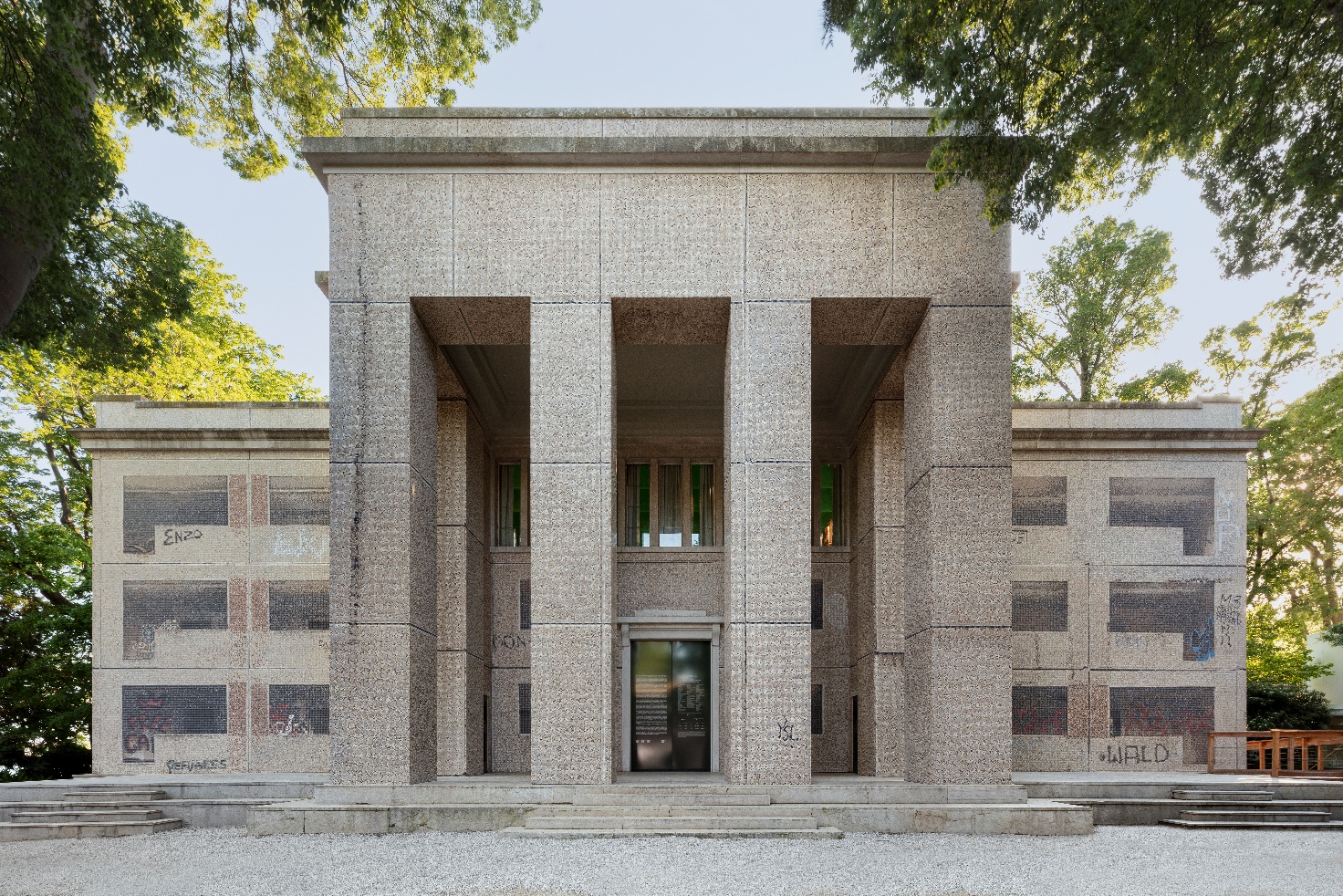
German Pavilion Biennale Arte Venice 2026 – Henrike Naumann, Sung Tieu, Ruin

German Pavilion. Biennale Arte 2026. Courtesy of La Biennale di Venezia

Germany

Henrike Naumann, Sung Tieu, Ruin


“Space can be read as a text,” says Henrike Naumann, one of the two artists in the German pavilion who bring to light sociopolitical issues concerning mechanisms of state surveillance. Having passed away a few months before the Biennale began, Naumann was unable to see her project realized in the Venetian spaces, but she nonetheless left a strong mark, characterized in her artistic research by the use of design and furnishings to explore the aesthetics of everyday life. Objects become the system of reference for making visible how people react to change and build a sense of belonging. Sung Tieu extends her work beyond the exhibition space as well, covering the walls of the pavilion’s Nazi-era architecture with more than three million mosaic tiles depicting the East German apartment block where her family lived alongside other Vietnamese immigrant workers.

Austria

Florentina Holzinger, Seaworld Venice


If there is one pavilion that has monopolized the attention of the public, critics and social media, it is the Austrian one, where Florentina Holzinger, curated by Nora-Swantje Almes, delivers one of the Biennale’s most radical and controversial interventions. Lines exceed two hours, and a notice outside warns of the sensitive nature of the performances. A bell recovered from the lagoon, hung at the entrance, is rung every hour by a nude performer; inside, in a flooded space, a jet ski circles round and round as a denunciation of overtourism, while a female Deposition turns in the wind. In the courtyard, a performer lives in a tank fed by the purified fluids of the Biennale’s bathrooms, a metaphor for a global order that relegates the most vulnerable to the status of waste. An heir to Viennese Actionism, Holzinger divides audiences but forcefully imposes her imagery. The project will continue at the Gropius Bau in 2027 and at the Kunsthalle Wien and AMANT in 2028.

Austrian performance - Florentina Holzinger at the opening of Seaworld Venice on the Biennale di Venezia 2026

Austria Pavilion. Biennale Arte 2026 Venice. Florentina Holzinger’s performance Courtesy La Biennale di Venezia.

*All images on this blog are used for educational and critical purposes only. Credits and copyrights belong to their respective owners and authors. The gallery remains at the disposal of the rightsholders for any corrections, specific citations, or immediate removals upon request.