
Kore-eda Above All, Followed by Tsukamoto and Wenders
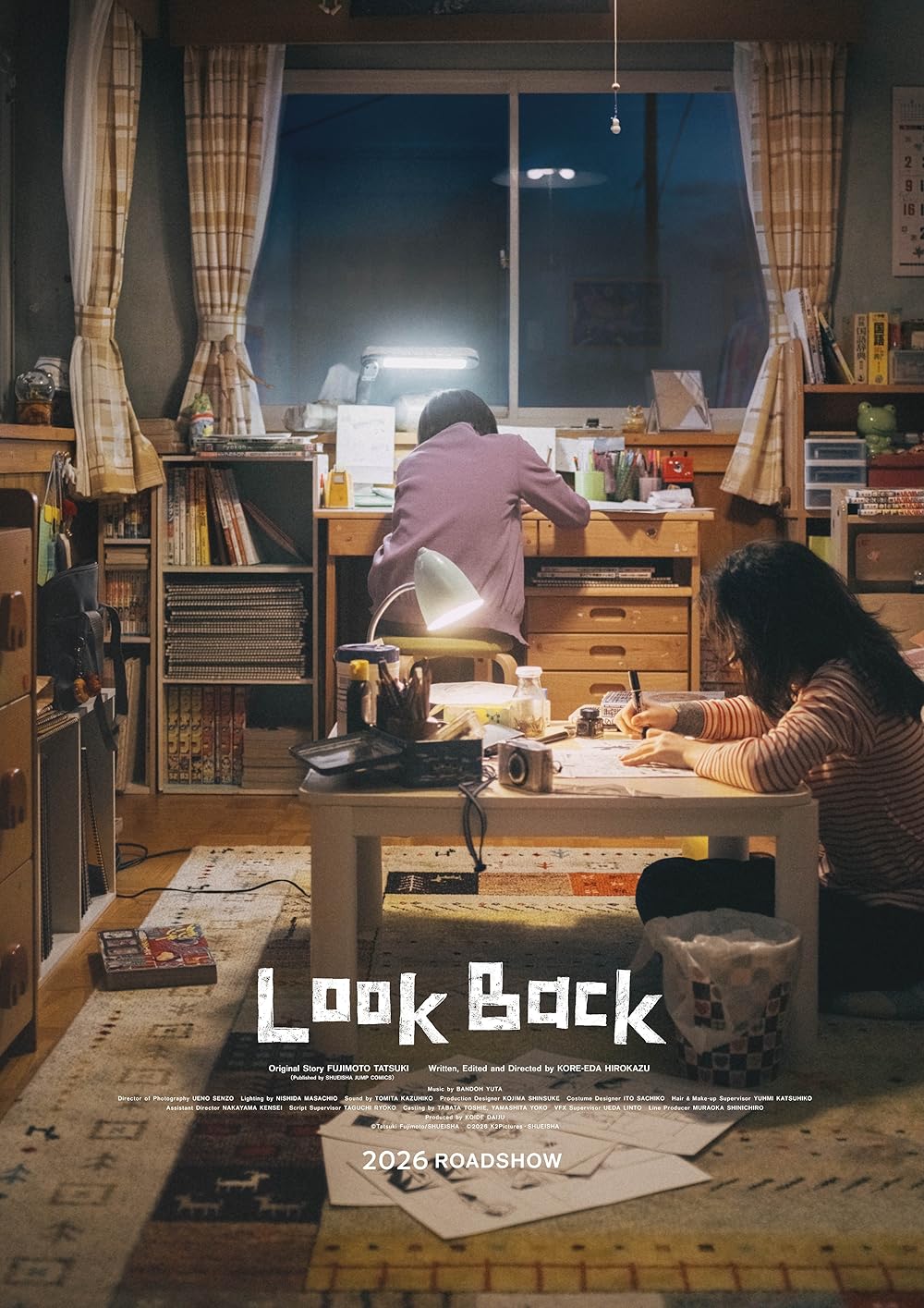
This year’s Venice Film Festival fully proved itself to be an edition of the highest level, with great names but above all great films. For us, auteur cinema is something more than a perfect cinematic product: it shouldn’t be a product, and certainly not a perfect one, but rather a total work, free and uncompromising, in which the author’s gaze becomes immediately recognizable. This is why our personal Golden Lion goes, without hesitation, to Hirokazu Kore-eda, director, screenwriter and editor of “Look Back.”
Taking inspiration from the ranking published by Sentieri Selvaggi, we too try to put in order the films we saw at the 83rd Venice International Film Festival.
An important premise: we are not film critics, and this ranking is simply an account of the films we loved most and of what we believe has value worth sharing: not just a perfectly crafted film, but the feeling of standing before an author’s unrepeatable vision.
In the end, Venice 83 leaves us above all with one question: when does a film stop being simply a good film and become a work of art? Perhaps the presentation of these films can offer some clues toward an answer.
1.LOOK BACK – Hirokazu Kore-eda
10 with honors
For us, there was no contest.
Look Back is the masterpiece of Venice 83: a work of art that speaks about art itself, about the almost physical need to create, and about the discipline and tenacity required to turn talent into a form of expression.
Fujino and Kyomoto draw. They draw for hours, days, years. And Kore-eda manages to make cinematic exactly what would seem impossible to portray: the creative process. The repeated gesture of the pencil, the confrontation with someone more talented than us, the ambition, the frustration, and that mysterious necessity that drives an artist to keep going.
It’s a poetic film that never becomes mannered. A film about friendship, about loss, and about vocation, but above all a painting in motion.
2. MR. NELSON, DID YOU KILL PEOPLE? Shinya Tsukamoto
9
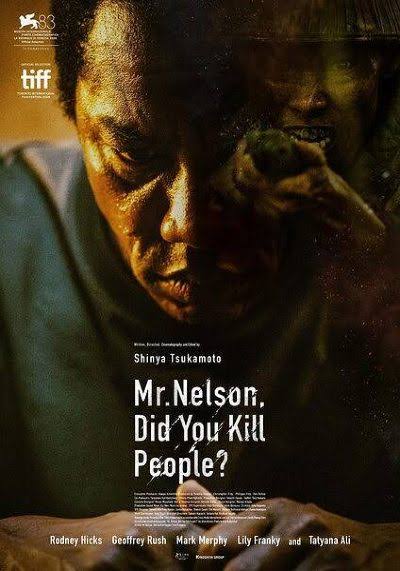
That the director of Tetsuo: The Iron Man could make, nearly forty years later, one of the most powerful anti-war films of recent years is already something extraordinary.
Tsukamoto draws on the story of former marine Allen Nelson to tell of the destruction of innocence and of what war leaves behind in those who survive it.
Harsh, extremely violent, and poetic at the same time.
It’s almost impossible not to think of Full Metal Jacket. At times it even feels like witnessing its ideal second chapter: there, Kubrick showed the military machine turning a boy into a soldier; here, Tsukamoto shows what remains of the man once that machine has finished its work.
Political cinema without proclamations, pacifist without rhetoric.
3. FROM INSIDE OUT, THE ARCHITECTURE OF PETER ZUMTHOR – Wim Wenders
8.5
Another film that speaks about art and about the process through which art takes shape.
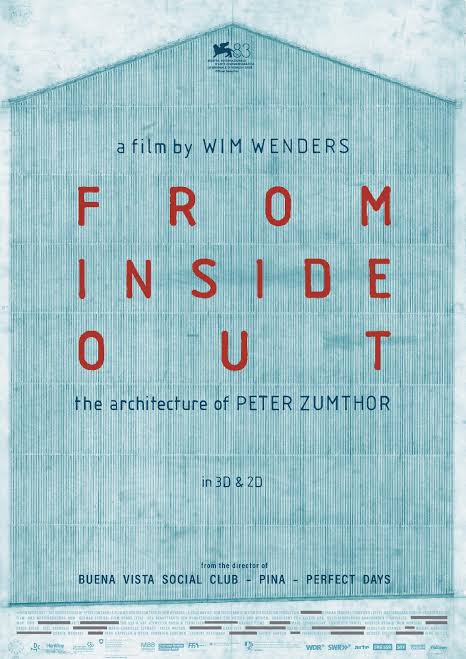
Wim Wenders followed Peter Zumthor for over fourteen years, building a film in which architecture isn’t simply explained: it’s traversed.
Matter, light, sound, surfaces, and the relationship between a building and its landscape become cinema. Zumthor builds through stone, concrete, wood, water, and light; Wenders reconstructs those same sensations through images, movement, sound, and time.
After Pina, The Salt of the Earth, and his previous encounters with architecture, one of the greatest directors of the twentieth century (and for us perhaps the greatest living filmmaker) proves once again that documentary can become cinema in its purest form.
THE BIG GROUP OF EIGHTS
This is where you realize just how high the level of Venice 83 was. Although in our view something is missing for these to be considered works of art, there’s no doubt that they are great films tackling various themes in different ways, but always with quality and solid narrative strength.
POSSIBLE LOVE – Lee Chang-dong
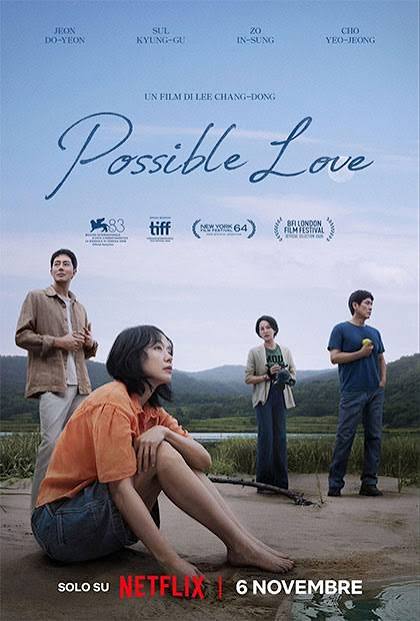
Two married couples, two worlds that meet through the camera: a laid-off worker and his wife, a documentary filmmaker and her husband. While collaborating on a film, their paths intertwine, revealing deep differences and unconfessed desires.
Lee Chang-dong’s return after Burning: 164 minutes of adult, complex, layered cinema that observes two couples and their lives without ever telling the viewer what to think. An immense film, in the best sense of the word.
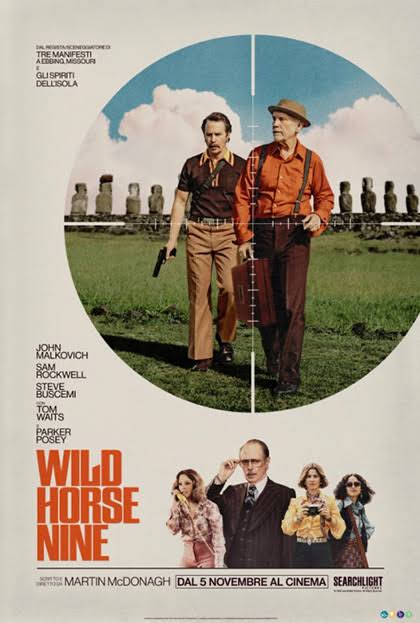
WILD HORSE NINE – Martin McDonagh
McDonagh takes two CIA agents, sets them down on Easter Island in 1973, and builds around John Malkovich and Sam Rockwell a film that’s pitch-black, funny, and deeply political.
As if that weren’t enough, McDonagh openly introduces into the fiction the theory of CIA involvement in the Kennedy assassination affair. A surprising and bold move worth highlighting. A historically unproven truth, of course (when will the complete declassification of the confidential documents happen?), but an extremely strong narrative choice. How is it that such an element passed almost unnoticed in the mainstream debate about the film?
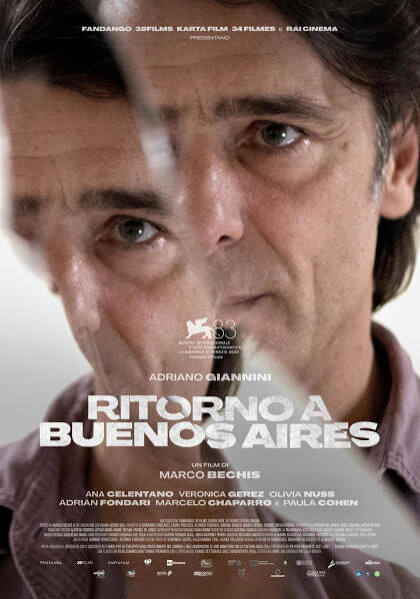
RETURN TO BUENOS AIRES – Marco Bechis
Marco Bechis returns to the wound of the Argentine military dictatorship and the desaparecidos through Mariano Guerra, magnificently played by Adriano Giannini, who returns to Buenos Aires after thirty-three years to testify against his torturers.
A painful account of Argentine fascism, of memory, and above all of the guilt of those who survived when so many others never came back.
A truly great political film: essential, personal, necessary.
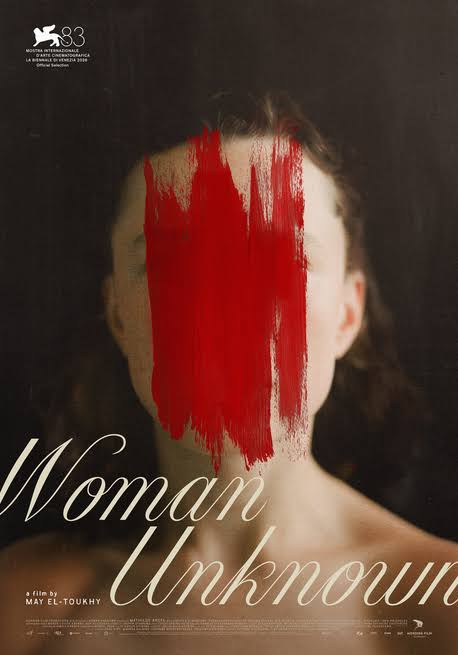
WOMAN UNKNOWN – May el-Toukhy
Marie is about to marry Christian, the wealthy widower she works for as a housekeeper and nanny. But the affair she had during the war with a German man could shatter everything: now, in the lawlessness of the postwar period, that past tries to resurface, but Marie is ready to do anything to stop it.
The festival’s official Golden Lion winner is a practically flawless cinematic product: rock-solid direction, gorgeous cinematography, great performances, a well-constructed screenplay.
Perhaps two awards is too many, but it’s hard to deny its quality.
And yet it’s precisely in this much-awarded film that the distinction underlying our ranking emerges most clearly: the difference between a magnificent, perfectly executed production and a total work of authorship.
It’s like comparing Milan Cathedral to Borromini’s San Carlo alle Quattro Fontane.
Both are masterpieces. But the Cathedral is the result of the ingenuity and labor of hundreds of people across the centuries; stepping into the San Carlino, instead, you immediately sense a single mind: Borromini’s. That mind, and no other.
Woman Unknown is Milan Cathedral.
We still prefer the San Carlino.
Honorable Mention
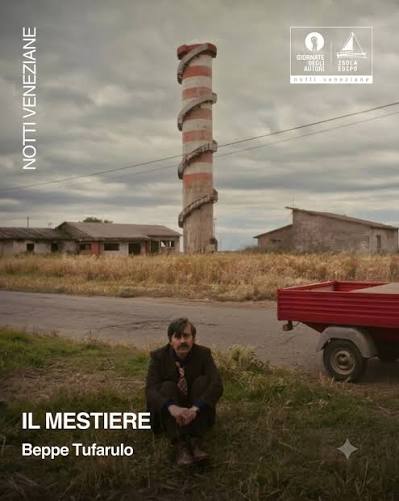
IL MESTIERE – Beppe Tufarulo
In an age of cinematic overabundance, streaming platforms, and products crafted with an almost flawless technical polish, a film like Il Mestiere reminds us why independent cinema still matters.
Beppe Tufarulo makes, outside the spotlight of the main Competition, for the Notti Veneziane sidebar, a film that’s crazy, difficult, profoundly Italian, impossible to mistake for anything else. A work that blends western, dark fairy tale, realism, and the grotesque, crossing a lunar, timeless South, carried by extraordinary actors and a fantastic score.
But above all, it proves something that isn’t a given at all today: it’s still possible to make a film without compromises.
This happens when enlightened producers truly believe in an author’s vision. When someone — like Marcello Paolillo and Art of Panic, together with the project’s other producers — decides to make room for madness and creative freedom, without turning every choice into a preemptive calculation about the market, distribution, or the algorithm.
Not everything necessarily has to be designed to please everyone.
Sometimes cinema has to be allowed to be strange, imperfect, risky, even off-putting. It has to be allowed to exist simply because an author has something they feel the need to put on screen.
Il Mestiere is exactly that.
These are the films worth going to the cinema for.
For a much broader and more expert critical take on Venice 83, we gladly point you to our friends and true experts at Sentieri Selvaggi, whose ranking inspired this article:
Venezia 83: i film di Kore-eda e Lav Diaz sono i più amati da Sentieri Selvaggi
*All images on this blog are used for educational and critical purposes only. Credits and copyrights belong to their respective owners and authors. The gallery remains at the disposal of the rightsholders for any corrections, specific citations, or immediate removals upon request.

