
Among our favourite pavilions at the Venice Biennale 2026, the Spanish Pavilion stands out with Los restos, an installation by artist Oriol Vilanova. Thousands of postcards transform the exhibition space into a visual archive that invites visitors to reflect on memory, the value of images, and the role of museums in contemporary art.
Some pavilions impress visitors with the monumental scale of their artworks, while others rely on spectacular technologies. And then there are those that manage to surprise us by starting with seemingly insignificant objects. This is precisely the case of the Spanish Pavilion at the Venice Biennale 2026, one of our favourites of this edition.
At the Giardini, Catalan artist Oriol Vilanova presents Los restos, a project curated by Carles Guerra that transforms the national pavilion into an environment entirely dedicated to illustrated postcards. This immersive installation is the result of more than twenty years of collecting and challenges the conventions of traditional museum displays, turning forgotten images into protagonists of contemporary art.
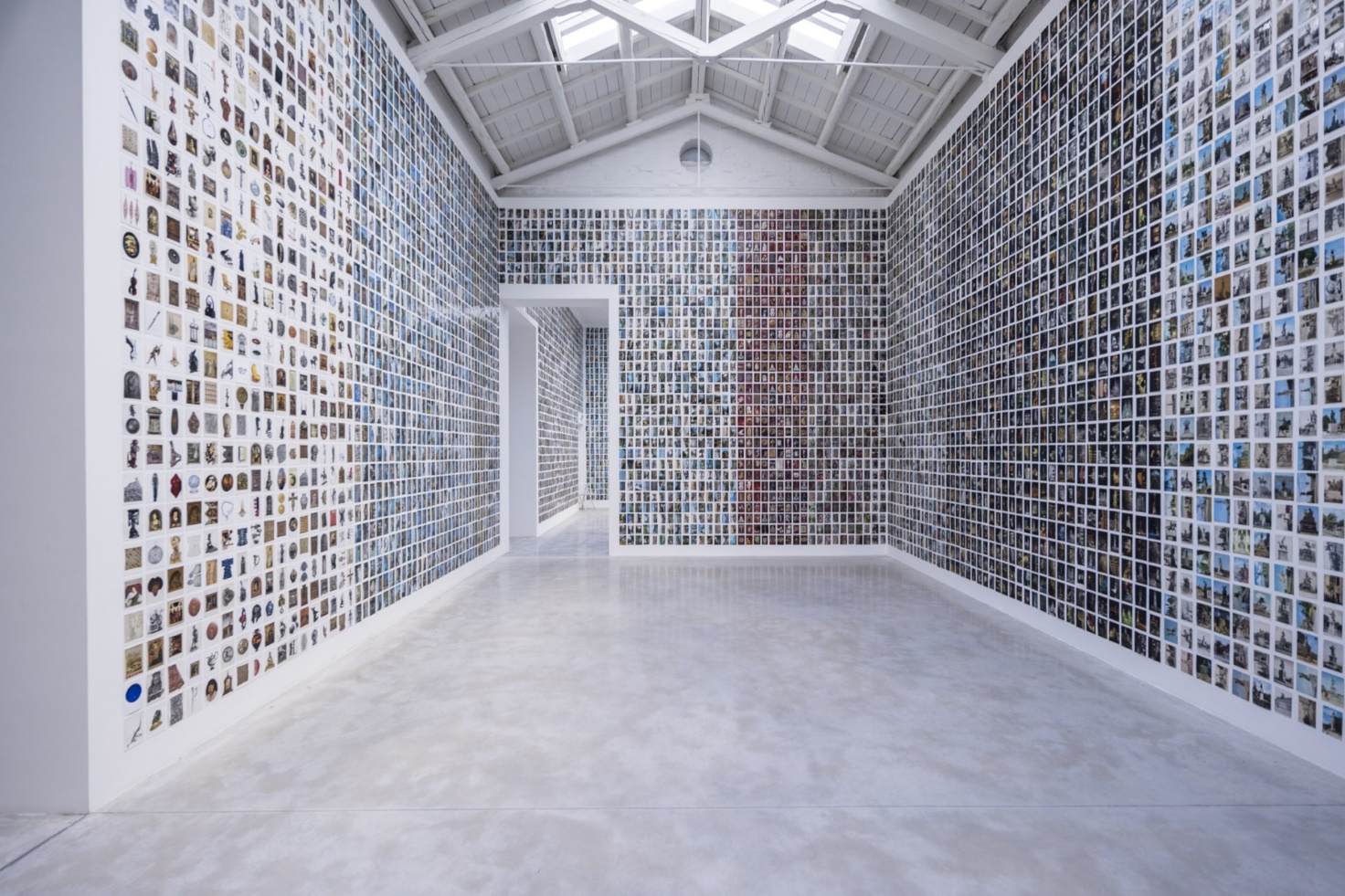
Oriol Vilanova, Los Restos, Spain Pavilion at 61ª Biennale Arte Venice. Ph Jacopo Salvi. Courtesy of La Biennale
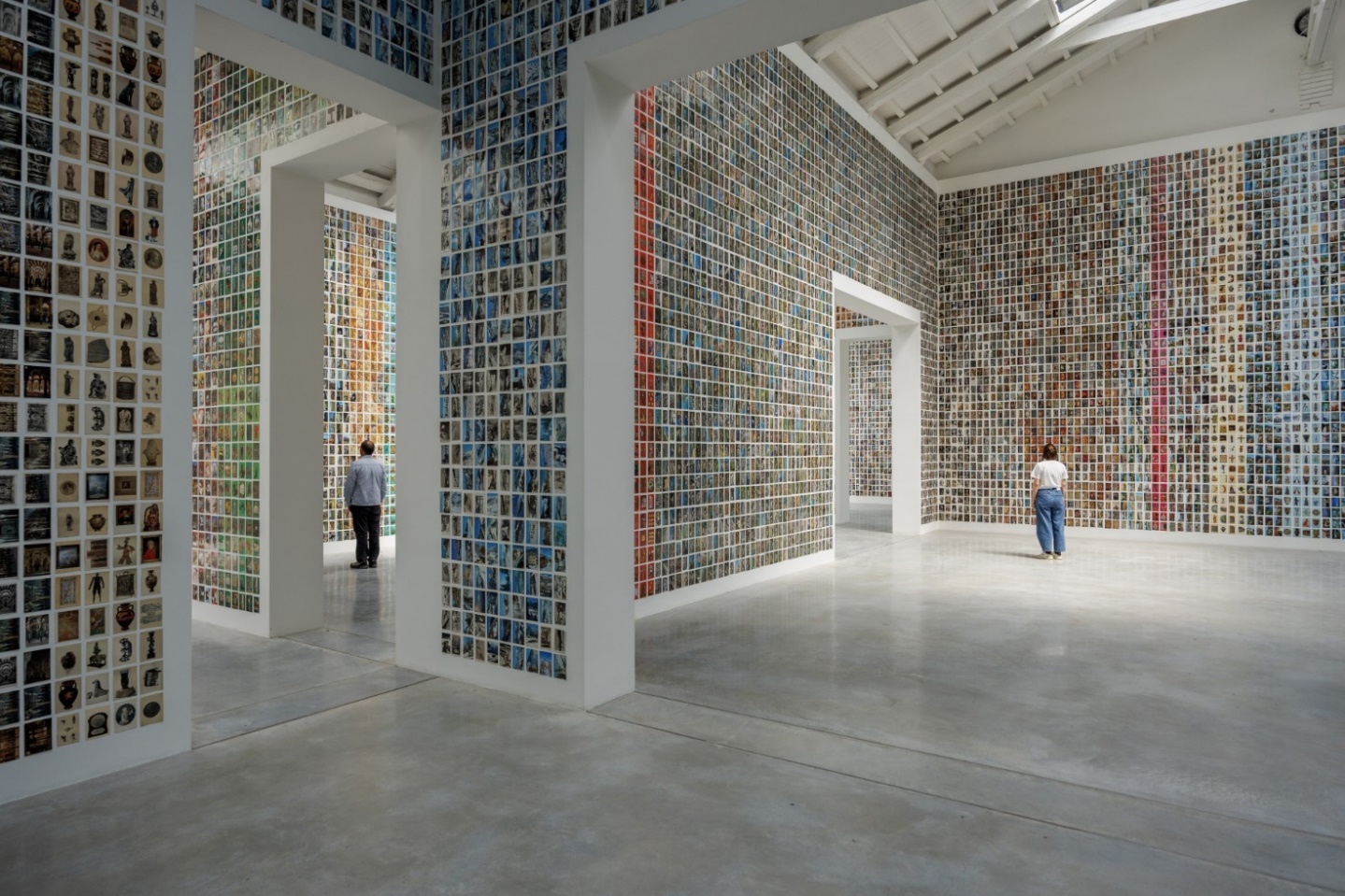
Oriol Vilanova, Los Restos, Spain Pavilion at 61ª Biennale Arte Venice. Ph Jacopo Salvi. Courtesy of La Biennale
Los restos: An Anti-Museum Built Through Accumulation
One of the most fascinating aspects of the project is the transformation of a collection of ordinary objects into an entire exhibition environment.
Vilanova creates what might be described as an anti-museum, a space in which the traditional hierarchies of art history no longer apply. There is no predetermined chronological route, nor any distinction between images considered important and those regarded as having little value.
A reproduction of a masterpiece can coexist with a photograph of a tourist destination, while a famous monument may appear alongside an anonymous landscape. Every postcard contributes to the composition with equal visual significance.
Through repetition and accumulation, the artist questions the criteria by which cultural institutions select, preserve, and assign value to objects. The museum, traditionally associated with uniqueness and authenticity, is replaced here by a universe of reproductions, serial images, and second-hand materials.
The paradox is particularly intriguing: postcards, originally created to reproduce and circulate existing images, acquire a new artistic identity precisely through their accumulation. What might seem insignificant individually becomes part of an artwork capable of completely transforming our perception of space.
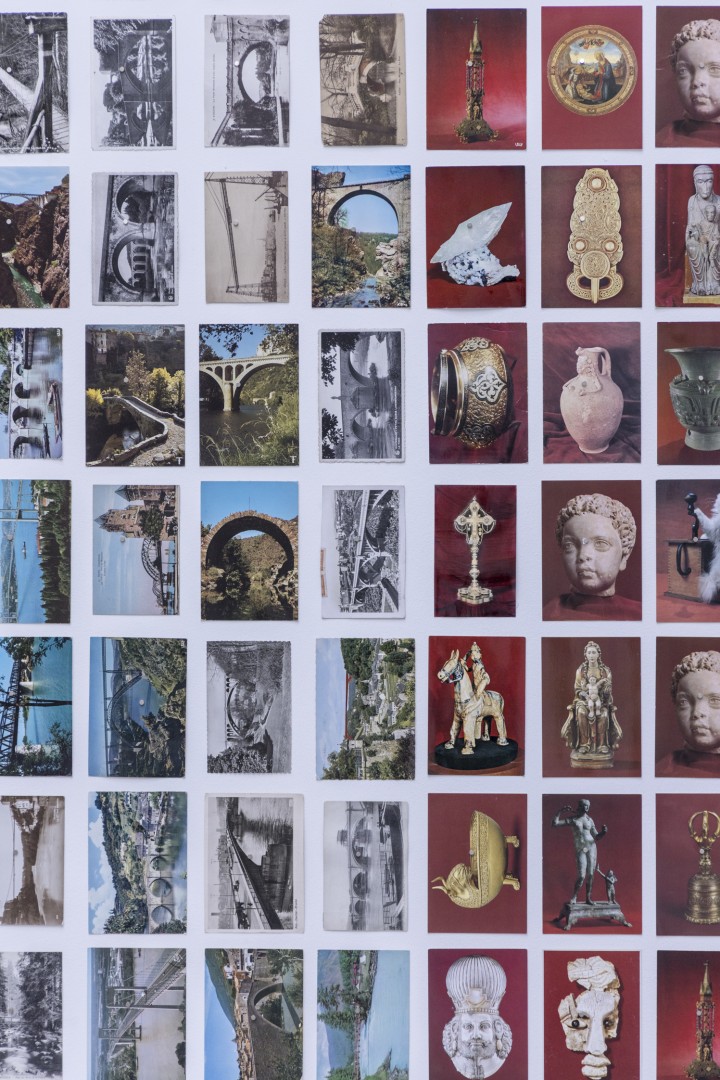
Oriol Vilanova, Los Restos. Ph Marco Zorzanello Courtesy of La Biennale
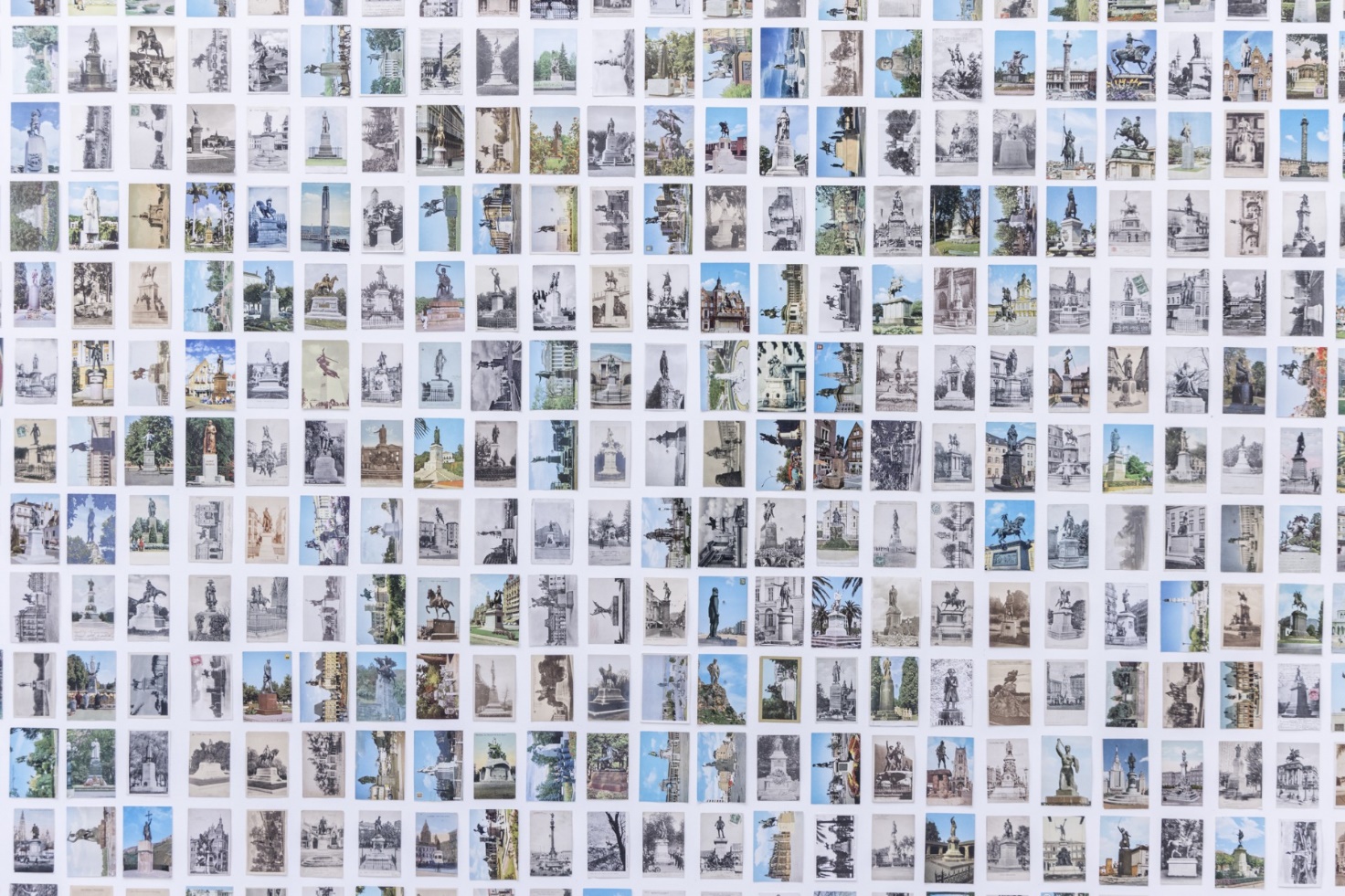
Oriol Vilanova, Los Restos. Ph Marco Zorzanello Courtesy of La Biennale
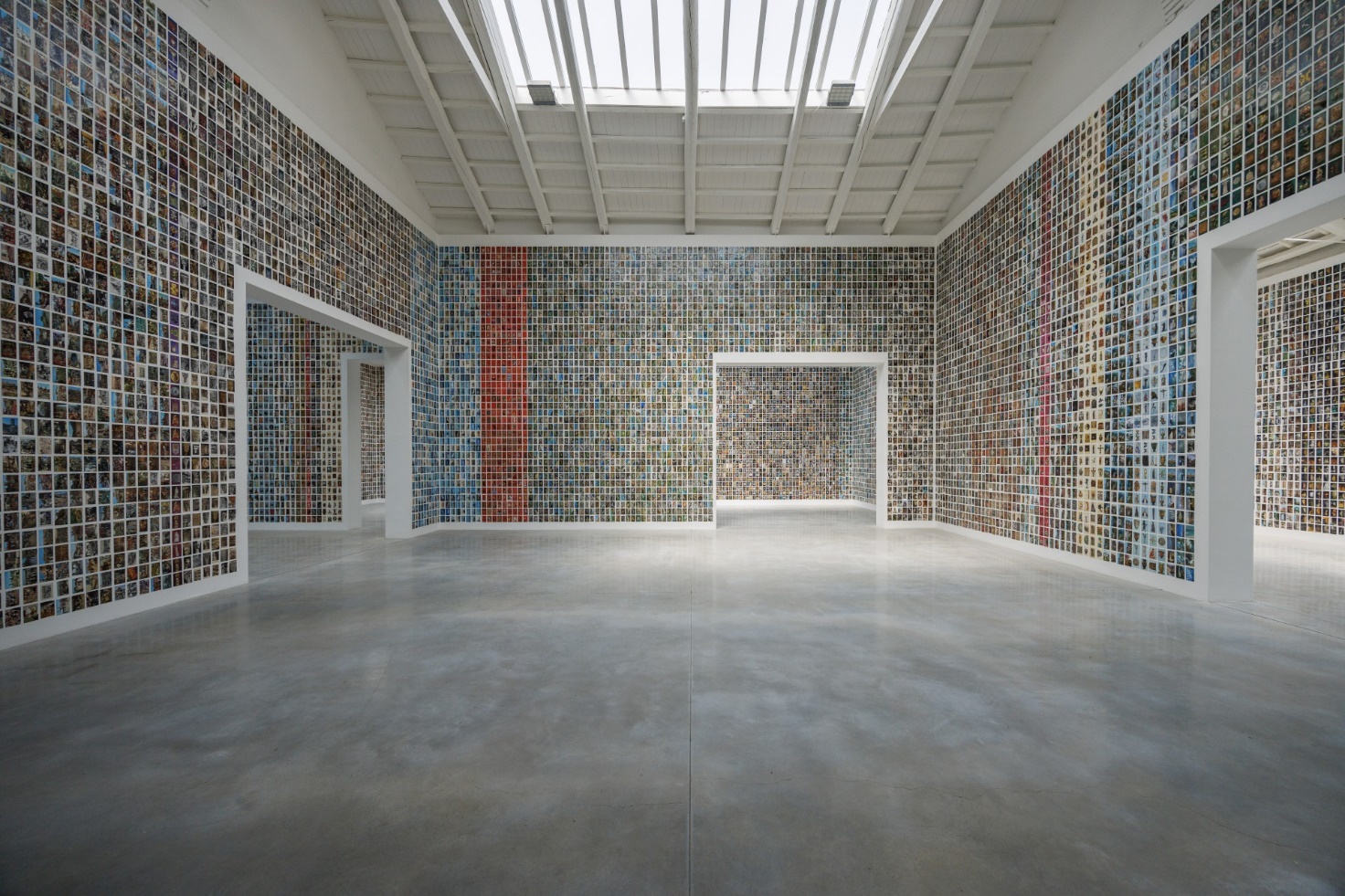
Oriol Vilanova, Los Restos. Ph Marco Zorzanello Courtesy of La Biennale
Why the Spanish Pavilion Is One of Our Favourites at the Venice Biennale 2026
Among the many installations presented at the Venice Biennale 2026, Oriol Vilanova’s project particularly impressed us with its ability to create an engaging visual experience using such simple and familiar materials.
The appeal of Los restos lies in the relationship between the visual power of the whole and the fragility of its individual elements. From a distance, the installation appears as a vast abstract composition; up close, every postcard invites us to slow down, observe, and imagine a story.
It is a project that resonates particularly with those of us who work with images and artworks every day. It reminds us that the value of an image does not depend exclusively on its rarity, technique, or the signature of its creator, but also on the relationships, memories, and interpretations it can generate.
Above all, Vilanova demonstrates that a contemporary art installation does not necessarily require sophisticated technology or extraordinary materials to radically transform a space.
Sometimes, thousands of small, forgotten postcards are enough to create an entire universe in which we can lose ourselves, rediscover memories, and question what we choose to remember.
*All images on this blog are used for educational and critical purposes only. Credits and copyrights belong to their respective owners and authors. The gallery remains at the disposal of the rightsholders for any corrections, specific citations, or immediate removals upon request.

