Ei Arakawa-Nash’s Dolls on What It Means to Be a Parent


This year, the Japan Pavilion at the Venice Biennale presents one of the most original experiences of the entire International Exhibition, one we think shouldn’t be missed: Grass Babies, Moon Babies, a project by artist Ei Arakawa-Nash (Iwaki, 1977).
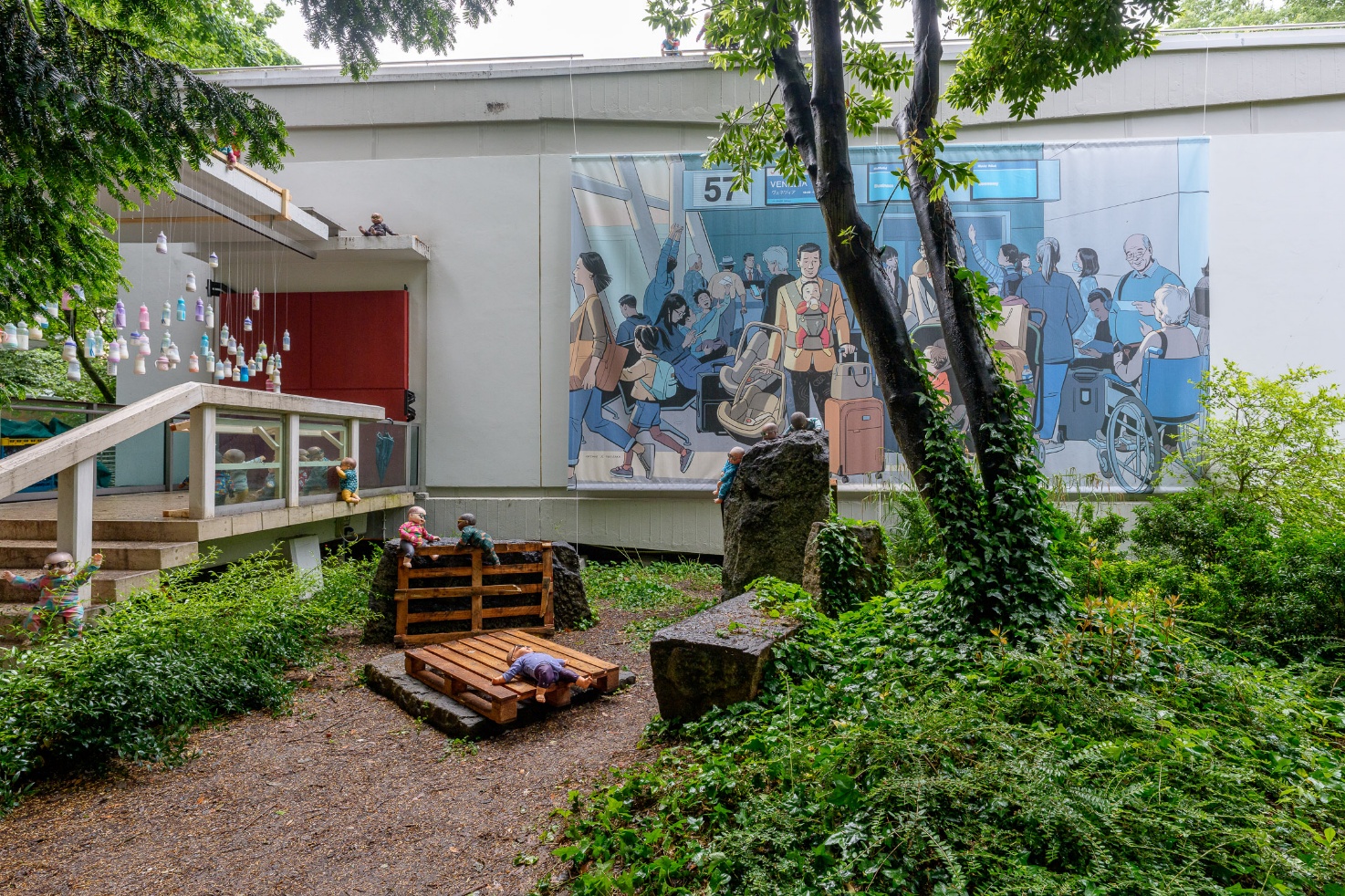
Japan Pavilion at the Venice Biennale 2026: Ei Arakawa-Nash's Dolls on What It Means to Be a Parent
Grass Babies Moon Babies, Ei Arakawa-Nash, Japan Pavilion, Venice Biennale, Ph Andrea Avezzù
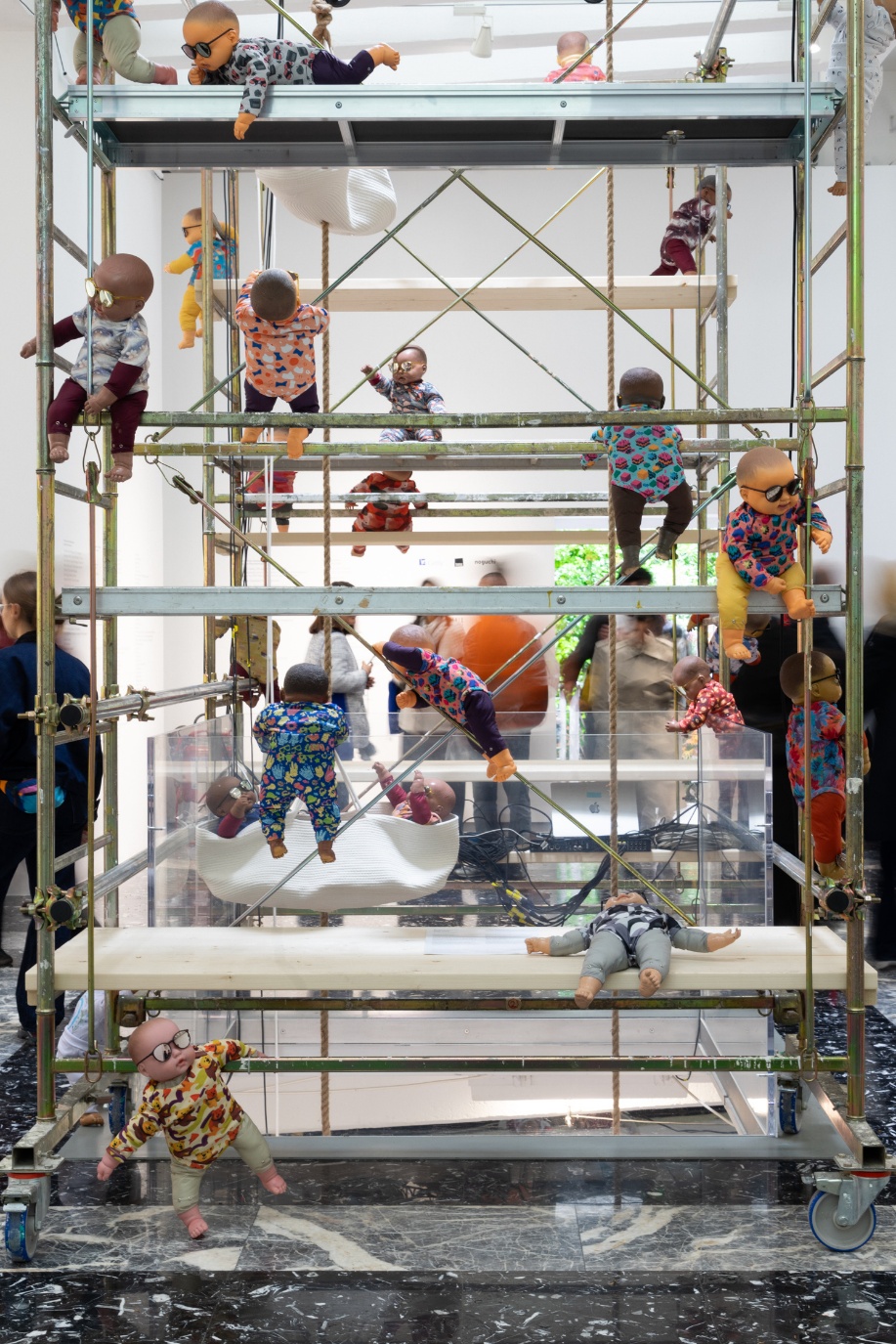
How the Experience Works: Dolls, Changing Stations, and Poems

Inside the pavilion, and partly outside as well, visitors are invited to hold and carry around one of 200 available dolls, weighing roughly as much as a real newborn (5-6 kg). With this doll in hand, visitors can move freely around the pavilion and reach the upper floor, where they’ll find supports, or actual changing stations, where they can change its diaper — one of the first and most basic actions a parent must perform at the start of their child’s life.

Inside the diaper, however, is a QR code that can be used to claim a “diaper poem,” matched to the “birth” date assigned to the doll by the Pavilion’s staff. The dates linked to the dolls are not random: they evoke symbolic moments tied to the artist’s personal experiences — he became a father of twins in 2024 — as well as to social dynamics and historical events that have shaped, and continue to shape, Japan and the world.


Who Is Ei Arakawa-Nash, and the Personal Connection to the Work

The show is curated by Lisa Horikawa, senior curator and director of the National Gallery Singapore, and Mizuki Takahashi, executive director and chief curator of the Centre for Heritage, Arts and Textile in Hong Kong. It unfolds over the seven months of the Biennale Arte as a constantly evolving platform, shaped through the participation of visitors and collaborators.

“I never imagined I’d be able to represent Japan at the Venice Biennale, after giving up my Japanese citizenship a few years ago. Now my husband and I are raising two children who are part of the Asian diaspora community in Los Angeles,” Arakawa-Nash said, as reported by Exibart.

Japan Pavilion at the Venice Biennale 2026: Ei Arakawa-Nash's Dolls on What It Means to Be a Parent
Grass Babies Moon Babies, Ei Arakawa-Nash, Japan Pavilion,
Venice Biennale, Ph Luca Zambelli Bais
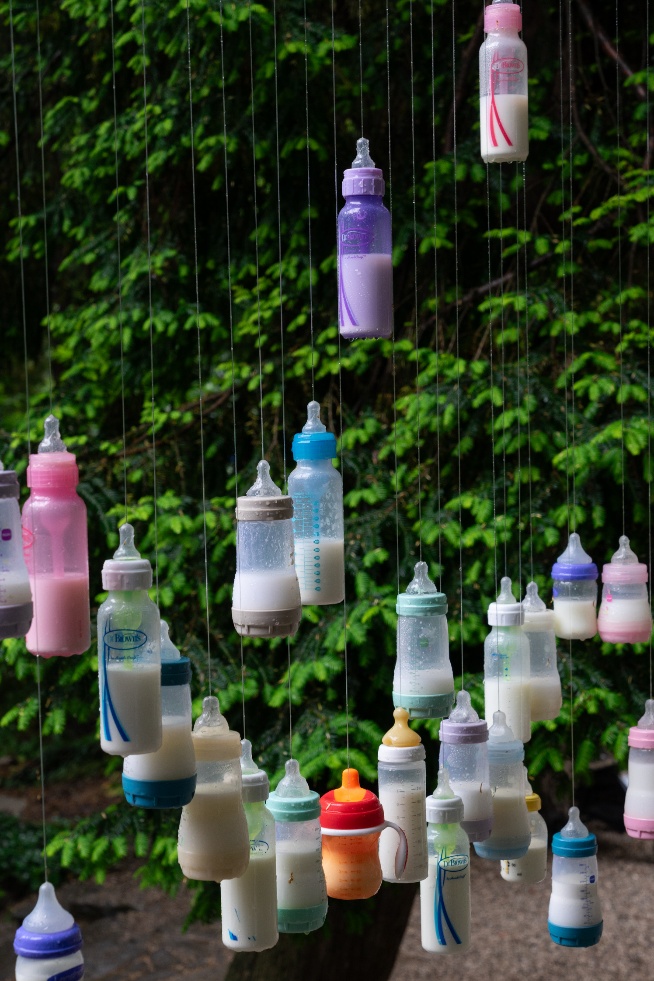
A Work of Participatory Art, Not Just Performance

The Japan Pavilion stands out in particular for how different it is from everything around it, offering a striking example of total participatory art outside the canonical genres of fine art. This isn’t merely a performative act — one the artist has inevitably drawn on, taking cues from Fluxus and Viennese Actionism of the last century — but a moment in which the viewer becomes an active protagonist and co-author of the work. Without the involvement of the thousands of visitors who agree to take part in this scenario, the pavilion would remain nothing more than a modernist structure filled with abandoned plastic dolls and childhood-themed decorations.

It’s the moment someone picks up that doll that sets off the “parenthood machine” devised by Ei Arakawa-Nash. An inanimate object comes alive and rises to the status of a universal symbol of a child, just as the body holding it — whoever that may be — rises to the role of parent. It is precisely this latter figure that the artist, a queer parent himself, wants to examine, offering everyone the chance, even just for a moment, to take on the responsibility of caring for a newborn. The action to be carried out is the same for everyone, but it can play out in endless ways depending on the meaning and weight each person pours into that heavy piece of plastic.

Visitor Reactions: Between Empathy and Social Media

What makes the experience particularly compelling isn’t just taking part in it, but doing so alongside and at the same time as other people, being able to witness the similarities and differences that draw certain participants together and set others apart within this purpose-built scenario. Some fully immerse themselves in the artistic fiction, treating the doll like a real baby that requires gentleness in every movement and soft, soothing words. Others are curious about the peculiarity of the moment, but once the diaper is changed and the poem retrieved, the thrill of discovery fades, and the doll — heavy as it is — is quickly set aside. Still others seem more interested in photographing what they’re doing to share on social media than in actually engaging with the experience, and so the “child” becomes a prop for a selfie, and changing the diaper becomes a comic moment to film.

Grass Babies, Moon Babies can therefore be seen as a bounded field of action, triggered by an artistic practice that stages the full range of human types, in both their individuality and their collectiveness — never drawing a line to dictate right or wrong behavior, but instead highlighting, precisely through this freedom, the complexity of being a parent.

Japan Pavilion at the Venice Biennale 2026: Ei Arakawa-Nash's Dolls on What It Means to Be a Parent
Grass Babies Moon Babies, Ei Arakawa-Nash, Japan Pavilion,
Venice Biennale, Ph Luca Zambelli Bais

*All images on this blog are used for educational and critical purposes only. Credits and copyrights belong to their respective owners and authors. The gallery remains at the disposal of the rightsholders for any corrections, specific citations, or immediate removals upon request.