Greek Pavilion at the Venice Biennale 2026

by | Oct 4, 2026

Andreas Angelidakis’ Escape Room Between Memory and Reality


Among the pavilions that impressed us most at the Venice Biennale 2026 is the Greek Pavilion. With Escape Room, Athenian artist and architect Andreas Angelidakis transforms the historic building in the Giardini into an immersive environment made of images, architectural fragments, videos, objects, and references to Greek history.

Curated by George Bekirakis, the project borrows the language of escape rooms but uses it to create something very different from a simple game. There is no door to find or puzzle to solve in the shortest possible time. The real question seems to be: what reality are we trying to escape from? The result is one of the most original projects of this edition of the Biennale, where architecture, contemporary art, and digital culture come together to reflect on memory, identity, and the way we construct our perception of the present.

We also included the Greek Pavilion in our selection of the seven must-see national pavilions at the 2026 Venice Biennale.
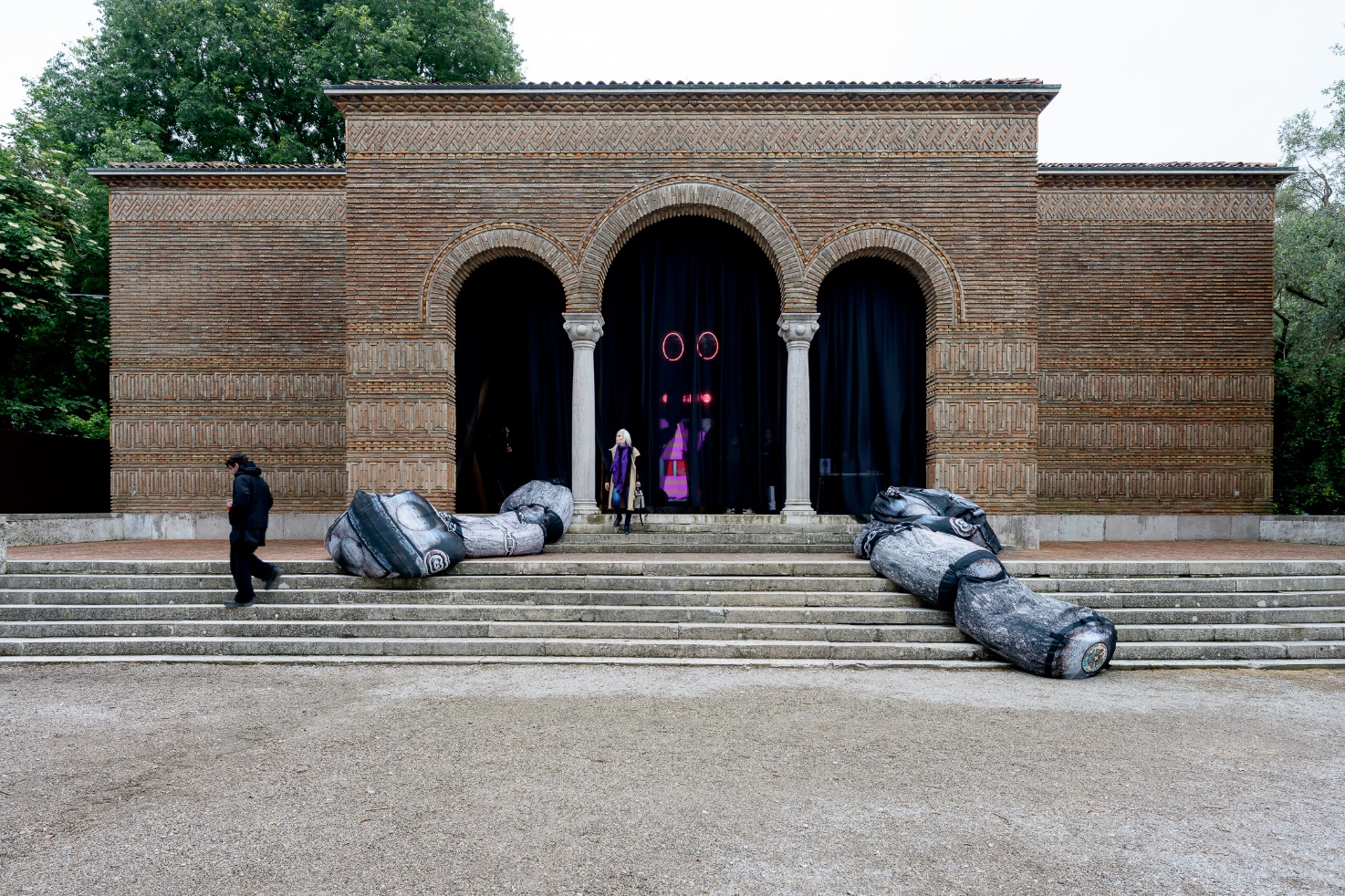
Greek Pavilion at the Venice Biennale 2026: Andreas Angelidakis’ Escape Room Between Memory and Reality

Pavilion of Greece, 61st International Art Exhibition – La Biennale di Venezia, In Minor Keys. Photo Andrea Avezzù. Courtesy La Biennale di Venezia
Andreas Angelidakis: Between Architecture, Art, and Digital Culture

Born in Athens in 1968, Andreas Angelidakis has long worked at the intersection of art, architecture, design, and digital culture. In his practice, space is never simply a container for artworks, but becomes a narrative tool in its own right.

One recurring theme in his work is the ruin, understood not only as an archaeological remain, but also as something modern, imaginary, and digital.

Angelidakis is particularly known for his soft ruins: architectural fragments transformed into large, soft, modular elements that can be moved, crossed, and inhabited by the public. In this way, the monumentality of architecture loses its rigidity and becomes something mutable and temporary.

In Escape Room as well, visitors do not encounter a traditional sequence of artworks to be passively observed. They are invited to move through the space, search for connections between what they see, and accept that not everything has an immediate explanation.

Escape Room: A Contemporary Plato’s Cave

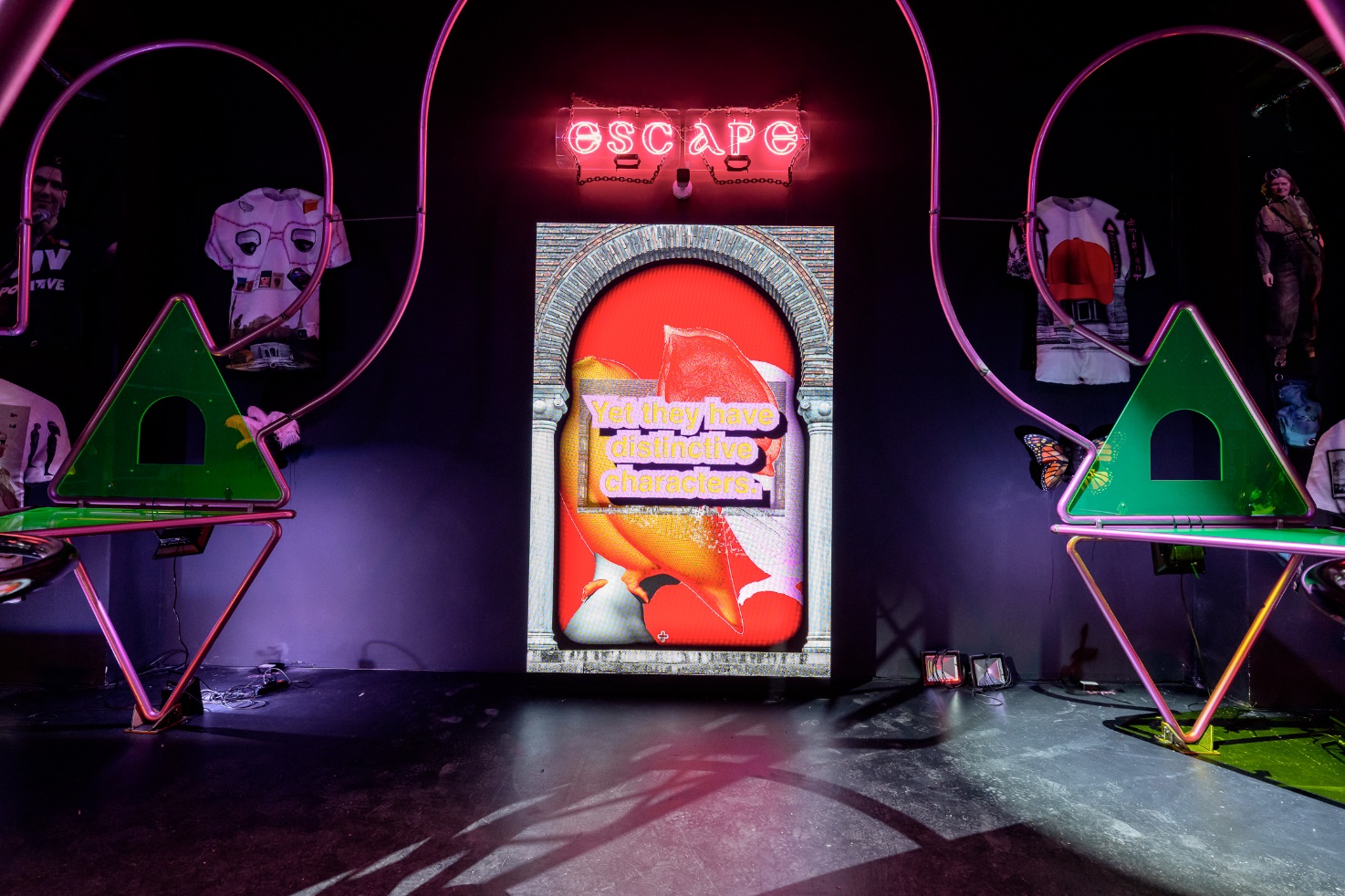
One of the central references of the project is the famous Allegory of the Cave by Plato. In Plato’s story, a group of people imprisoned inside a cave observe shadows projected onto a wall and mistake them for reality. Angelidakis brings this image into the present and connects it to a world dominated by screens, images, algorithms, and continuous flows of information. The Greek Pavilion thus becomes a kind of contemporary cave, constructed through videos, architecture, objects, and fragments of collective memory. This is where the title Escape Room takes on a deeper meaning. Visitors are invited to look for a way out, but not necessarily from the physical space of the pavilion. What is really being questioned are the systems through which we interpret what we see and decide what should be considered real.

Among the most emblematic elements of the installation is a surveillance camera continuously filming itself. A simple, almost ironic image that transforms the mechanism of control into a closed circuit and introduces a reflection on our everyday relationship with devices and images.

Greek Pavilion at the Venice Biennale 2026: Andreas Angelidakis’ Escape Room Between Memory and Reality

Pavilion of Greece, ESCAPE ROOM, Photo Andrea Avezzù. Courtesy La Biennale di Venezia
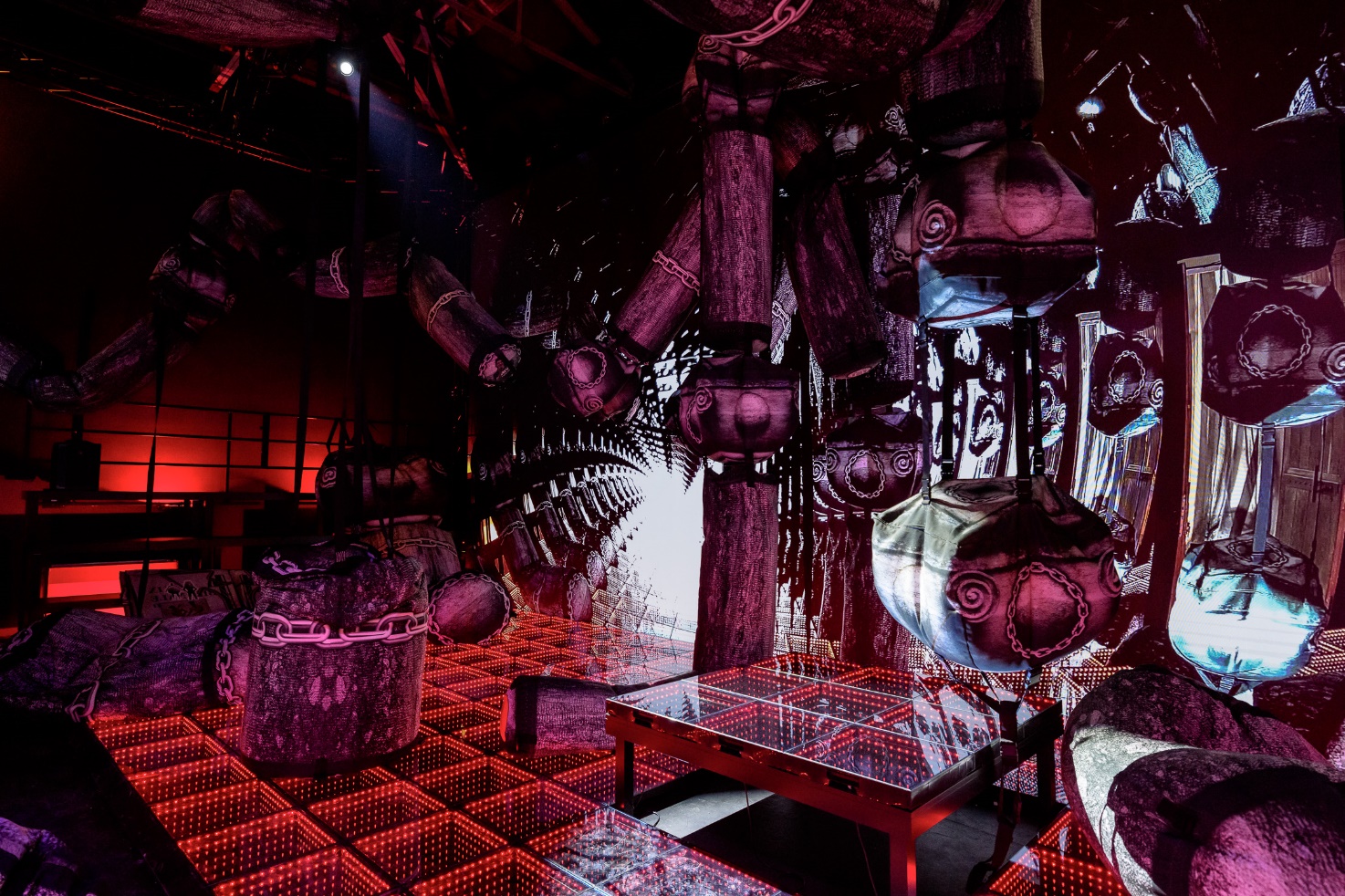
A Labyrinth of Images and Fragments of Greek History

Entering the pavilion, visitors encounter a deliberately complex environment. Angelidakis creates a labyrinth of images, videos, architectural elements, objects, and souvenirs connected to Greek history and identity.

There is no single narrative thread. The elements are scattered throughout the space like clues that each visitor can choose to follow or ignore.

Some refer directly to the history of Greece’s participation in the Biennale. Among them is the memory of the period of the Greek Civil War, when the country did not participate in the exhibition and Peggy Guggenheim used the Greek Pavilion to present her collection of Cubist, abstract, and Surrealist works.

Elsewhere, references appear to figures from Greek culture and social history, including Vasso Katraki, Yannis Tsarouchis, Zak Kostopoulos, and Maria Beikou.

These names are not used to construct a linear narrative of national history. Instead, they function as traces and testimonies that interrupt the exhibition route and reveal how every account of the past is the result of selections, omissions, and continuous reinterpretations.


Greek Pavilion at the Venice Biennale 2026: Andreas Angelidakis’ Escape Room Between Memory and Reality

Pavilion of Greece, ESCAPE ROOM, Photo Andrea Avezzù. Courtesy La Biennale di Venezia
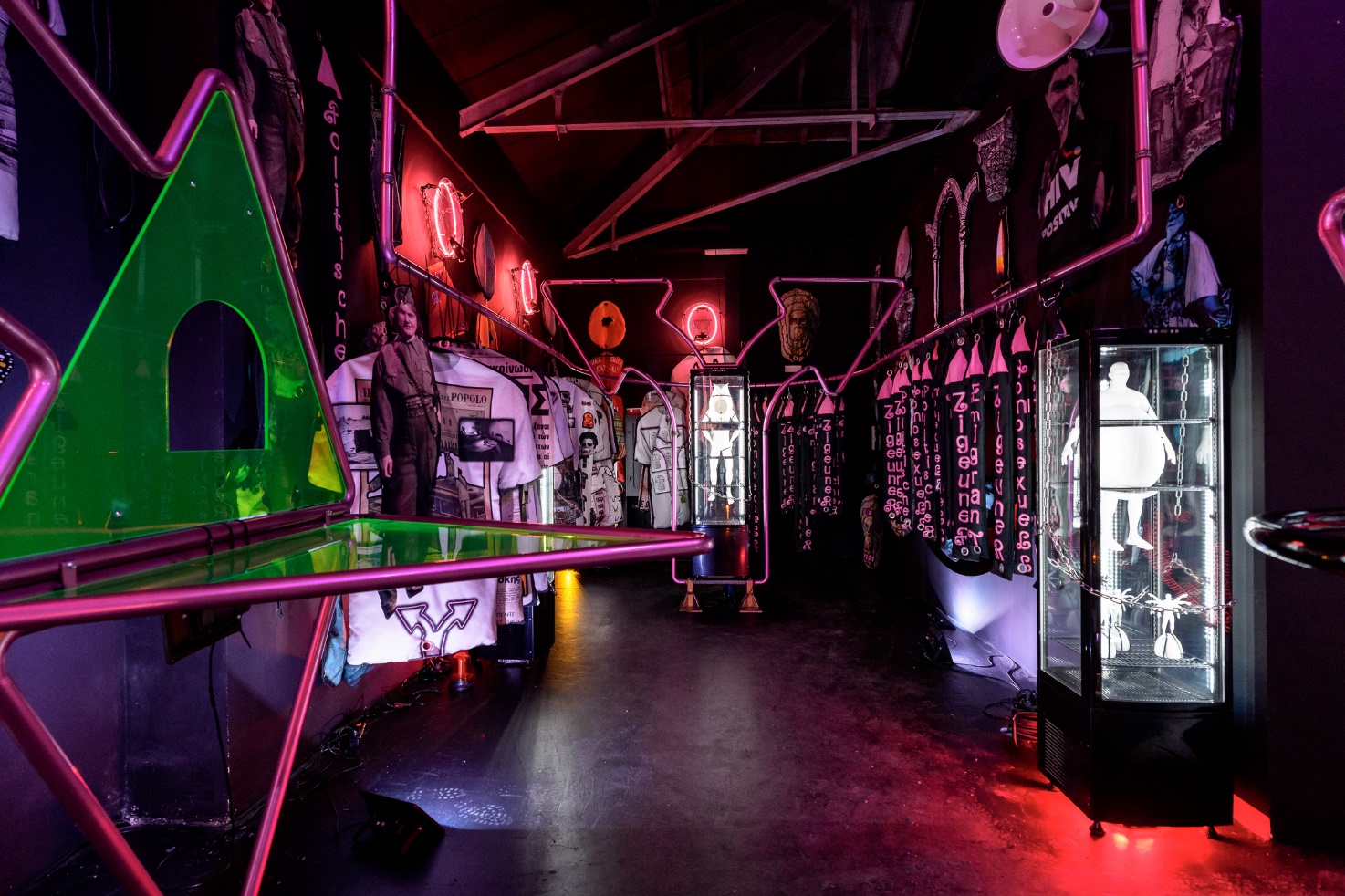
Greek Pavilion at the Venice Biennale 2026: Andreas Angelidakis’ Escape Room Between Memory and Reality

Pavilion of Greece, ESCAPE ROOM, Photo Andrea Avezzù. Courtesy La Biennale di Venezia

Greece Between Ruins, History, and Contemporary Identity

For a Greek artist, engaging with antiquity inevitably means confronting an extremely powerful visual legacy. Temples, columns, statues, and ruins have become universal symbols of classical culture, but also images that have been endlessly reproduced, commercialised, and transformed into souvenirs.

Angelidakis is fully aware of this visual heritage and, rather than rejecting it, chooses to dismantle and transform it.

The ruin is therefore not treated simply as evidence of something belonging to the past. It becomes a device through which to question the present, connecting the weight of history with a society dominated by the constant production and circulation of images.

The Greek Pavilion itself, built in the early 1930s and characterised by a Neo-Byzantine architectural language, also becomes part of this process. The national building is not merely the background of the installation: it becomes one of the materials through which Angelidakis works and reflects.

An Escape Room Without a Real Solution

This is precisely one of the aspects we appreciated most about the Greek Pavilion at the Venice Biennale 2026. The title suggests a space from which one has to find a way out. Angelidakis almost does the opposite: he invites visitors to stay, observe, and question what is in front of them. He offers neither a definitive solution nor a single interpretation. The clues are scattered throughout the space, but it is up to the audience to decide which ones to follow and what connections to create.

Escape Room thus becomes an effective metaphor for the contemporary world, suspended between ruin and digital environment, history and simulation, memory and the present. It is a project that transforms the architecture of the pavilion into a real experience and reminds us how often what we consider reality depends on the way we choose to look at it. Perhaps, then, the real challenge is not understanding how to escape the room, but realising which room we have already entered.


With its reflection on unstable truths, history and national identity, Escape Room adds another perspective to the wider framework of In Minor Keys, Koyo Kouoh’s curatorial project for the 61st Venice Biennale.

*All images on this blog are used for educational and critical purposes only. Credits and copyrights belong to their respective owners and authors. The gallery remains at the disposal of the rightsholders for any corrections, specific citations, or immediate removals upon request.