
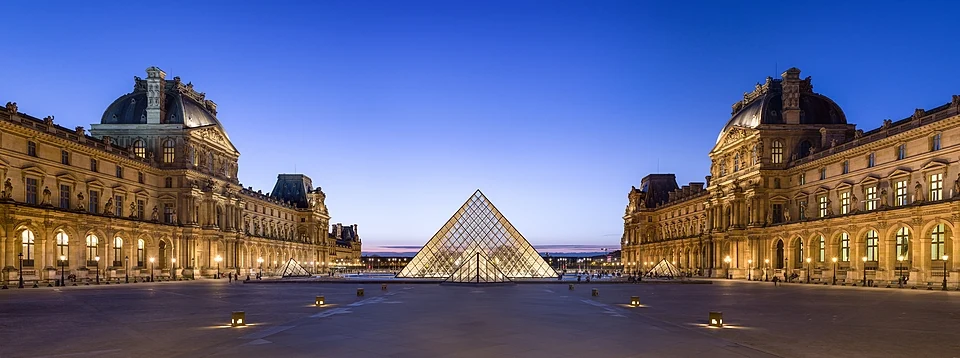
A T-shirt sold in the world’s most visited museum can take on a completely different meaning as soon as it crosses a few hundred kilometers. That’s exactly what’s happening these days with “All You Need Is Louvre,” the new capsule collection created by French artist, photographer, and writer Thomas Lélu, set to arrive in the Paris museum’s shop on September 4.
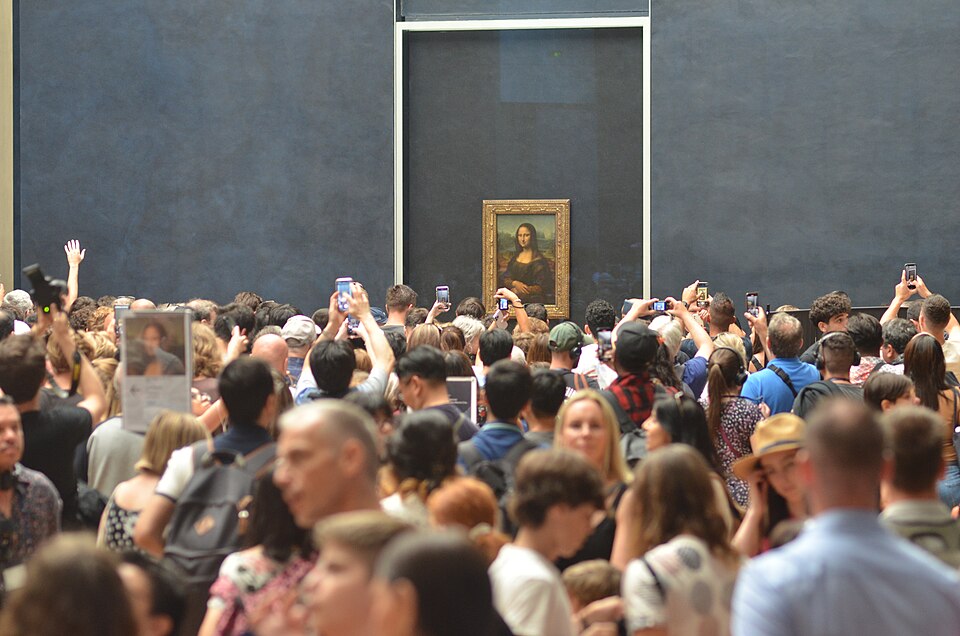
The project stems from a direct collaboration between the French institution and Lélu, an artist known for his style built on wordplay and gentle irreverence, with a minimalist design that echoes the blue stroke of a Bic pen. The result is a line spanning clothing and stationery, decorated with handwritten phrases and puns inspired by the museum’s permanent collection masterpieces. The collection’s guiding motto is “All You Need Is Louvre,” but it’s another slogan that has sparked debate and hilarity in one Italian region: “Mona Who?,” printed on some T-shirts and bags in clear reference to Leonardo da Vinci’s Mona Lisa, the most photographed artwork in the world, housed right there in the Paris museum.
Lélu’s project reportedly draws conceptual inspiration from Marcel Duchamp’s irreverent gesture with his famous L.H.O.O.Q., the mustachioed Mona Lisa of 1919, albeit with a lighter touch, closer to the idea of “art modeste” and everyday artistic engagement. The irony the Dadaist artist directed at the painting’s extreme popularity relative to every other masterpiece in art history is repurposed by Thomas Lélu as a strategic marketing device to reaffirm the myth of the Mona Lisa. The two words evoke and encapsulate one of the world’s most famous images in an immediate, easily sharable way, a clean, pop visual designed to be shared with as wide an audience as possible. A simple slogan, conceived primarily to appeal to the museum’s international visitors, without anticipating that it would trigger a linguistic short-circuit just a few hours’ flight from Paris.
The controversy that has exploded on social media over the past few days concerns Italy specifically and more precisely, the Veneto region. In the regional dialect, “mona” is one of the most common and versatile words, capable of taking on very different meanings depending on context and intonation: it can refer to a foolish, naive, or slow-witted person, or, more crudely, to female genitalia. What was meant in Paris as a simple pop tribute to the Mona Lisa thus sounds like something else entirely in Veneto. The phonetic similarity between the two terms did not go unnoticed. As soon as the first images of the collection began circulating on Instagram, irony erupted across Italian social media, with hundreds of comments, jokes, and a surge of shares, some claiming the “perfect Venetian souvenir” had been created, while others jokingly bet the T-shirt would soon sell out around Venice and its province.
The story even drew in public figures, including former Veneto Region president Luca Zaia, who commented on the matter on his Facebook page, joking that “Mona Who?” wasn’t some new insult in the Venetian dialect, but rather a marketing stunt by the museum before conceding that a Venetian, faced with that slogan, could easily read it in a way entirely different from what the Paris curators had intended.
Linguistic misunderstanding aside, the episode illustrates a trend increasingly common among major European cultural institutions: relying on pop, ironic, social-media-friendly language to make their merchandise more accessible and “viral,” breaking away from traditional codes of museum communication. In the Louvre’s case, the operation inadvertently and ironically demonstrated just how a simple play on words can turn into a viral phenomenon for entirely unforeseen linguistic reasons, thousands of kilometers from the room housing the Mona Lisa, reasons that certainly did no harm and, if anything, helped boost visibility for the marketing campaign of what is already the world’s most famous museum.
*All images on this blog are used for educational and critical purposes only. Credits and copyrights belong to their respective owners and authors. The gallery remains at the disposal of the rightsholders for any corrections, specific citations, or immediate removals upon request.

